Bitcoin Price Today: Live Updates & Chart
Live Bitcoin Price Data, Comprehensive Charts, and Up-to-the-Minute Market Analysis
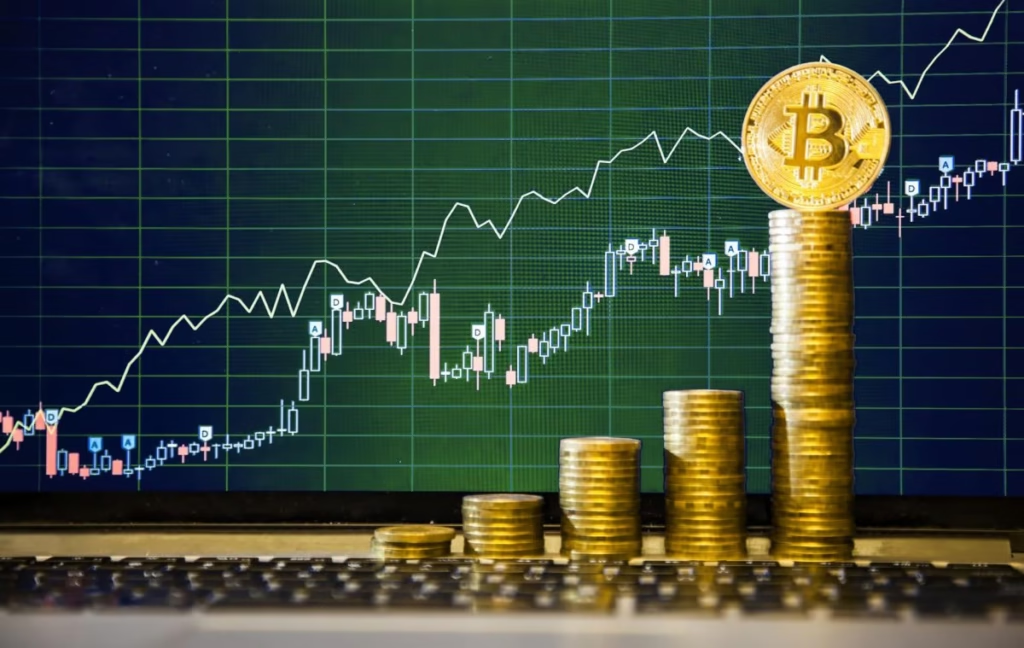
- Bitcoin: Exploring the Digital Revolution in Global Finance
Bitcoin, the groundbreaking cryptocurrency, has redefined the global financial landscape. Since its creation in 2009 by the enigmatic Satoshi Nakamoto, Bitcoin has emerged as a beacon of innovation in the financial world. Designed to operate as a decentralized currency, Bitcoin bypasses traditional banking systems, offering individuals freedom from centralized control and greater financial autonomy.
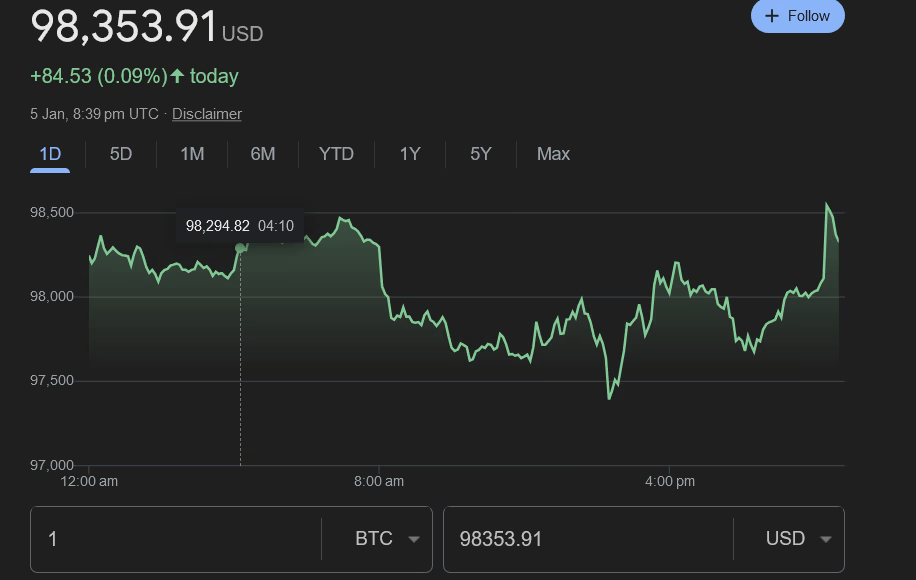
The “Bitcoin price,” a metric closely watched by investors, fluctuates significantly, reflecting its growing adoption and speculative interest. Whether tracking the “Bitcoin price USD” or asking, “What is 1 Bitcoin price in India?” individuals and institutions alike are drawn to this revolutionary asset. Bitcoin’s appeal lies not only in its decentralized nature but also in its potential to disrupt traditional financial systems, providing transparency, security, and opportunities for growth.
In this guide, we’ll delve into Bitcoin’s origins, how it functions, and its ever-changing market dynamics. From understanding Bitcoin’s value in the global economy to examining its investment potential and challenges, this article equips you with the insights needed to navigate the evolving cryptocurrency world. Whether you’re a seasoned investor or a curious observer, Bitcoin’s story is one you can’t afford to miss.
- What is Bitcoin?
At its core, Bitcoin is a decentralized, digital currency that operates on a technology known as blockchain. Unlike traditional currencies issued by central banks, Bitcoin is not controlled by any single authority. Instead, it relies on a network of computers, distributed globally, to validate and record transactions. This decentralized nature is one of the key features that distinguishes Bitcoin from conventional fiat currencies.
Bitcoin is often referred to as a cryptocurrency because it employs cryptography to secure transactions and control the creation of new units. Each Bitcoin transaction is recorded on a public ledger, the blockchain, which is immutable and transparent. This means that once a transaction is added to the blockchain, it cannot be altered or reversed, ensuring the integrity and security of the system.
One of the defining characteristics of Bitcoin is its limited supply. The protocol dictates that only 21 million Bitcoins will ever exist. This scarcity, similar to precious metals like gold, contributes to Bitcoin‘s value proposition as a potential store of value and a hedge against inflation. As of today, over 19 million bitcoins have already been mined, meaning the new supply that is to be mined is very limited. The last bitcoin will be mined in 2140. This scarcity is why people also refer to bitcoin as “digital gold”. The scarcity increases as bitcoin price increases and demand continues to grow.
Bitcoin can be divided into smaller units, with the smallest unit being a “Satoshi,” named after the creator of Bitcoin. One Satoshi is equal to one hundred millionth of a Bitcoin (0.00000001 BTC), making it highly divisible and suitable for microtransactions. If you were to invest in Bitcoin stock you would be able to see this in action.
The introduction of Bitcoin marked a paradigm shift in the financial landscape, offering an alternative to traditional banking and payment systems. Its decentralized, secure, and transparent nature has captured the attention of individuals, businesses, and even governments worldwide. As a result, we also have seen an increase in searches like “bitcoin atm near me” and “atm bitcoin near me
- How Bitcoin Works
Understanding how Bitcoin works requires a grasp of its underlying technology, blockchain, and the process of mining.
- Blockchain Technology: Blockchain is the foundation upon which Bitcoin is built. It is a distributed, immutable ledger that records all Bitcoin transactions in chronological order. Each block in the chain contains a set of transactions, and once a block is added to the chain, it cannot be altered or removed. This ensures the integrity and transparency of the Bitcoin network.
- Mining: Bitcoin mining is the process by which new Bitcoins are created and transactions are verified and added to the blockchain. Miners use powerful computers to solve complex mathematical problems, and the first miner to solve
- Transaction Verification: When a Bitcoin transaction is initiated, it is broadcast to the network. Miners then compete to validate the transaction by including it in a new block. Once a block is created and added to the blockchain, the transaction is considered confirmed. The number of confirmations increases as more blocks are added to the chain, further securing the transaction. Bitcoin news websites often refer to the “number of confirmations” to indicate how final a transaction is.
- Wallets: Bitcoin wallets are software applications or hardware devices that allow users to store, send, and receive Bitcoin. There are different types of wallets, including desktop wallets, mobile wallets, web wallets, and hardware wallets. Each type offers varying levels of security and convenience. For instance, hardware wallets are considered the most secure as they store private keys offline, making them less susceptible to hacking.
- Transactions: To send Bitcoin, a user needs the recipient’s Bitcoin address, which is a string of alphanumeric characters. The sender initiates the transaction using their wallet, and the transaction is broadcast to the network. Miners then verify the transaction and add it to the blockchain. Once confirmed, the Bitcoin is transferred from the sender’s wallet to the recipient’s wallet. Transactions are quick, with confirmations usually taking around 10 minutes.
As the network continues to grow, we will also see an increase in bitcoin usd and bitcoin price today.
- Advantages of Bitcoin
Bitcoin presents numerous advantages over traditional financial systems, making it a compelling choice for both individuals and businesses.
- 1. Decentralization
- 2. Lower Transaction Costs
- 3. Transparency and Security
- 4. Financial Accessibility
- 5. Investment Opportunities
Bitcoin continues to pave the way for a financial revolution, offering a unique combination of innovation, security, and economic empowerment.
- The Future of Bitcoin
The future of Bitcoin is a topic of much speculation and debate. While it is impossible to predict the future with certainty, several trends and developments suggest that Bitcoin will continue to play a significant role in the global economy.
- Mainstream Adoption: Bitcoin is gradually gaining mainstream acceptance as a legitimate asset class and a means of payment. Institutional investors, corporations, and even some governments are starting to recognize Bitcoin‘s potential and are integrating it into their operations. Companies like Tesla, MicroStrategy, and Square have made substantial investments in Bitcoin, signaling confidence in its long-term value. As such, we are starting to see a surge in the price of bitcoin stock.
- Technological Advancements: Ongoing technological developments, such as the Lightning Network and other layer-2 solutions, aim to address Bitcoin‘s scalability issues and improve transaction speed and efficiency. These advancements could enhance Bitcoin‘s usability for everyday transactions and pave the way for broader adoption.
- Regulatory Clarity: As the regulatory landscape for Bitcoin matures, increased clarity and certainty could foster greater institutional adoption and investment. Governments around the world are exploring ways to regulate Bitcoin and other cryptocurrencies in a manner that balances innovation with consumer protection and financial stability.
- Decentralized Finance (DeFi): Bitcoin is playing a key role in the burgeoning decentralized finance (DeFi) ecosystem. DeFi platforms leverage blockchain technology to offer a wide range of financial services, including lending, borrowing, and trading, without the need for traditional intermediaries.
- Conclusion
Since its inception in 2009, Bitcoin has transitioned from a revolutionary concept to a globally recognized digital asset, redefining the financial landscape. Its decentralized architecture, unparalleled security, and transparency make it a powerful alternative to traditional financial systems. Additionally, with its limited supply and increasing adoption, Bitcoin is often viewed as “digital gold” and an attractive long-term investment.
However, Bitcoin is not without its challenges. Its price remains highly volatile, with fluctuations influenced by market sentiment, regulatory developments, and macroeconomic factors. While investors are often drawn to the potential for high returns, it’s vital to monitor the bitcoin price closely and stay informed about market trends. Other considerations include regulatory uncertainties, scalability limitations, security risks, and environmental concerns related to mining activities.
The future of Bitcoin is brimming with potential. Technological advancements like the Lightning Network aim to address scalability, while growing institutional interest continues to drive its adoption. Moreover, evolving regulatory frameworks are expected to provide more clarity and stability, paving the way for mainstream acceptance. For those invested in the future of finance, tracking terms like “bitcoin price today,” “bitcoin price USD,” or “1 Bitcoin price in India” can help you stay ahead of emerging trends.
Whether Bitcoin achieves its vision of becoming a global reserve currency or remains a revolutionary digital asset, its influence on the financial world is undeniable. Understanding the nuances of Bitcoin and its price movements is crucial in this fast-paced digital age. Investors, business owners, and enthusiasts alike must stay informed about the latest Bitcoin news to make well-informed decisions.
As we step into a new era of finance, Bitcoin offers a unique opportunity to participate in a decentralized and borderless economy. Keeping a close eye on the bitcoin price, market developments, and adoption trends will be essential for leveraging its full potential. Whether you’re tracking its value in USD, AUD, or INR, Bitcoin remains a key player in shaping the future of digital assets and global finance.
About the Author