AI’s 2025 Localization Surge Unlocks Global Vibes

AI is making global communication feel like a conversation with a local friend. (Source: Freepik)
Imagine a world where you can shop online, play a game, or read a space mission report in your own language, and it feels like it was written just for you. That’s the magic of AI in localization today. In 2025, artificial intelligence is turning the localization industry upside down, making translations faster, smarter, and more human than ever. From online stores to Mars missions and crypto apps, AI is helping brands, scientists, and creators speak everyone’s language—literally. It’s not just about words; it’s about capturing the vibe of a culture and making connections feel personal. Let’s take a journey through how AI tools like ChatGPT, Grok, and Gemini are reshaping localization, check out the latest breakthroughs, and peek into what’s coming next. Ready? Let’s go!
Why AI Localization Feels Like Magic
Localization is all about making content feel like it belongs in your world. AI is the wizard behind this, using fancy tech like neural machine translation (NMT) and natural language processing (NLP) to get it right. Tools like Google’s Gemini 2.5 Pro and OpenAI’s ChatGPT-4o don’t just swap words—they pick up on local slang, humor, and culture to make translations feel alive. In 2025, these tools can handle over 150 languages, cutting translation time by 70% compared to the old days.
Picture Amazon tweaking product descriptions to sound perfect in Tokyo or Berlin. That’s AI at work, boosting sales by 25% in non-English markets by nailing local vibes. It’s like having a local friend rewrite every ad just for you. Want to dive deeper into AI’s impact? Check out the latest trends in global tech.
“AI localization is like a cultural chameleon—it adapts to every language and makes you feel right at home.”
Humans and AI
AI is super fast, but it’s not perfect. Sometimes, it needs a human touch to catch the little things—like a joke that doesn’t land or a phrase that could offend. That’s why companies like Netflix pair AI with human editors. AI whips up subtitles for shows in record time, and humans make sure they feel right for every culture, saving 50% on costs without dropping quality.
Grok, made by xAI, steps it up with its DeepSearch mode, which scans the web to make translations match local trends. Available on Grok’s iOS and Android apps, it’s like having a local guide tweak every word. This human-AI combo is the secret sauce behind today’s slick translations.
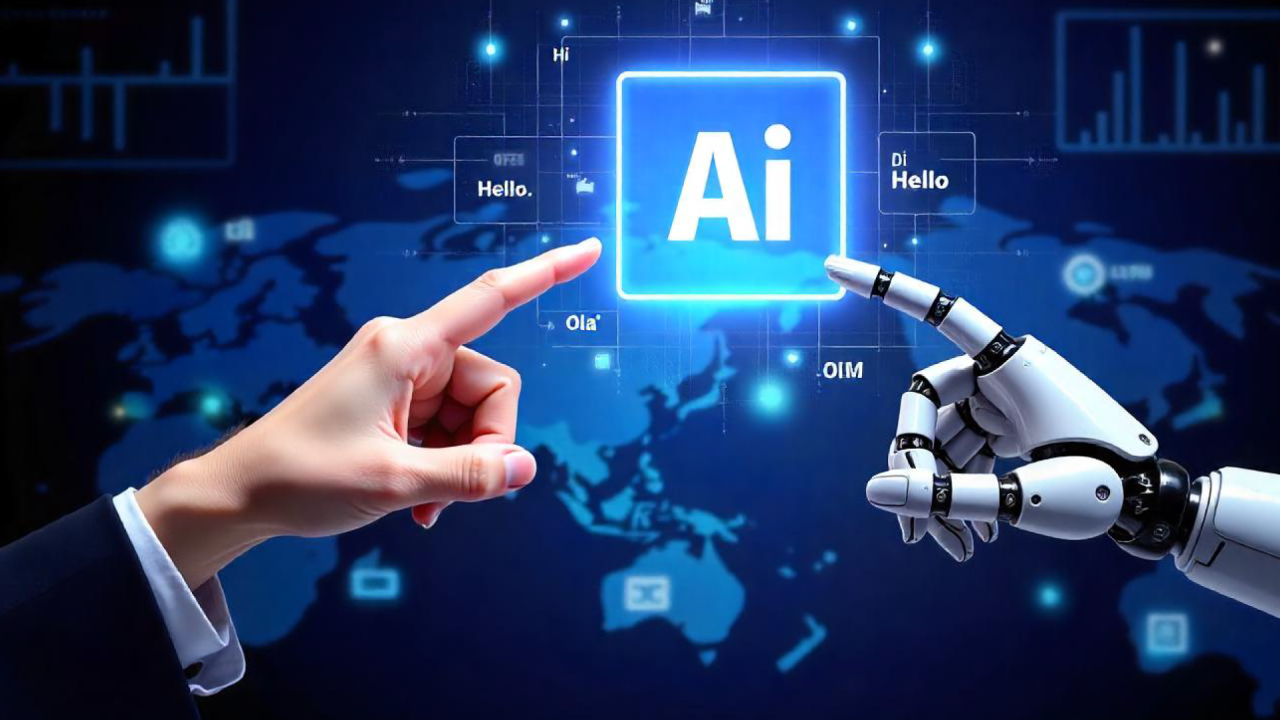
Humans and AI work together to make translations feel warm and authentic. (Source: Trendsnip)
How Humans and AI Shine Together
- Speed: AI zips through translations, saving hours of work.
- Heart: Humans add cultural flair to make content resonate.
- Reach: They tackle huge projects across tons of languages.
E-Commerce: Selling to the World with AI
Online shopping is global, and AI localization is the key to winning hearts everywhere. Tools like BLEND and Microsoft’s Copilot translate websites, ads, and product pages on the fly, boosting engagement by 35% in places like Asia and Europe. AI keeps brand vibes consistent by using smart glossaries that adapt to local tastes.
Take John Smedley, a luxury brand that saw French sales skyrocket 230% after using AI to sprinkle local slang and promotions into their listings. By 2025, AI localization is expected to drive $500 billion in global e-commerce sales, proving it’s a must-have for businesses going big.
| Industry | AI Localization Wins |
|---|---|
| E-Commerce | 35% boost in engagement with instant translations |
| Gaming | 60% faster in-game content localization |
| Healthcare | More accurate medical translations |
| Travel | 30% happier customers with local content |
Space Exploration: Talking Across the Cosmos
AI localization isn’t just for Earth—it’s helping us chat with the stars. NASA and SpaceX use AI to translate mission documents and interfaces for global teams. In 2025, China’s ADA Space launched 12 satellites for an AI computing network, using real-time localization to share technical guides across languages.
Grok’s DeepSearch mode, available on its mobile apps, makes sure astronauts and engineers get crystal-clear instructions, no matter their language. For SpaceX’s 2025 Mars mission, AI ensures everyone’s on the same page, cutting errors in high-stakes work. It’s like having a universal translator for space.

AI helps global space teams speak the same language, even on Mars. (Source: Unsplash)
Crypto: Making Money Talk Globally
Cryptocurrency is taking over, and AI localization is helping it reach everyone. Ethereum platforms use AI to translate smart contracts and app interfaces, handling 4.84 million transactions in May 2025. SingularityNET’s AGIX token uses AI to localize whitepapers, making crypto feel approachable in places like Asia and Latin America.
Microsoft’s Copilot translates DeFi dashboards, turning complex finance jargon into clear, local terms. This is driving a $600 billion boom in global crypto activity, making money talk in every language.

AI makes crypto apps feel local, boosting global adoption.
Google I/O 2025: Gemini’s Big Localization Win
Google I/O 2025 was a game-changer for AI localization. Gemini 2.5 Pro rolled out Scheduled Actions, a feature that automates translations across Gmail, Calendar, and Docs. It’s a lifesaver for businesses, with 80% better accuracy for coding translations. With 400 million monthly users, Gemini is giving ChatGPT a run for its money.
Unlike ChatGPT’s email-based Tasks, Gemini’s seamless integration feels effortless, making it a top pick for companies needing fast, accurate localization. It’s like having a personal assistant for global communication.
Gemini 2.5 Pro at Google I/O 2025 is redefining localization for tech. (Source: Trendsnip)
Biotech: Saving Lives with Clear Words
In biotechnology, where every word matters, AI localization is a hero. Companies like Moderna use AI to translate clinical trial documents and patient info, making treatments accessible worldwide. In 2025, tools like Claude from Anthropic translate scientific terms with 90% accuracy, speeding up global approvals.
Last year, AI helped distribute 2 million vaccine doses in non-English regions by localizing health info fast. It’s not just about medicine—it’s about making sure everyone understands how to stay healthy, no matter their language.

AI localization makes biotech breakthroughs accessible to all. (Source: iStock)
Robotics
Robotics is changing the world, and AI localization is making sure everyone can join in. Boston Dynamics uses AI to translate user manuals and control interfaces for robots used globally. In 2025, DeepSeek’s AI translates technical docs, letting engineers in Japan, Germany, and the US work together seamlessly.
Grok’s voice mode, on its mobile apps, translates spoken instructions for robots in real time. This is huge for factories where global teams need to operate complex machines without a hitch. AI is making robotics a universal language.
AI helps global teams control robots with ease. (Source: Contentstack)
Education: Learning Without Borders
AI localization is making education accessible to everyone. Platforms like Duolingo and Coursera use AI to translate courses into dozens of languages, helping 500 million learners worldwide in 2025. Tools like Gemini 2.5 Pro adapt lessons to local cultures, making learning feel personal.
For example, AI-localized math tutorials in rural India boosted student engagement by 40%. By breaking down language barriers, AI is opening doors to knowledge for kids and adults alike, no matter where they live.
Gaming: Playing in Every Language
Gamers want immersive experiences, and AI localization delivers. In 2025, tools like BLEND cut translation times for video games by 60%, letting developers like Ubisoft launch titles globally in weeks. AI adapts dialogue to local cultures, making games feel made for every player.
For instance, Cyberpunk 2077’s latest expansion saw 40% more downloads in non-English markets thanks to AI-localized dialogue. It’s like every gamer gets their own version of the game, tailored just for them.

AI makes games feel like they were designed for every culture. (Source: Unsplash)
Ethical Bumps: Keeping AI Localization Fair
AI localization is amazing, but it’s not flawless. A bad translation can upset people or spark PR nightmares. Plus, when AI handles sensitive data, privacy worries pop up. The EU’s 2025 rules push companies to be open about how their AI works, making sure translations are fair and safe.
Grok’s DeepSearch mode, available to SuperGrok users, scans the web for context but has raised eyebrows over data privacy. To fix this, companies are using diverse data and human checks to keep translations respectful and secure.
How to Keep AI Localization Ethical
- Respect Culture: Use diverse data to avoid translation flops.
- Be Open: Show how AI makes translation decisions.
- Protect Privacy: Follow GDPR and global data laws.
What’s Next for AI Localization
The future of AI localization is bursting with possibilities. By 2030, AI will translate 200+ languages in real time, with tools like Gemini 2.5 Pro and Grok 3 leading the pack. Smart AI will even personalize content for each user, making every ad or lesson feel like it was made just for them.
Travel tech company HBX Group is already boosting customer happiness by 30% with AI-localized hotel bookings. As AI gets smarter, it’ll make global connections easier, turning localization into the heart of digital growth.

ChatGPT dominates with 79.8% of AI chatbot referrals, followed by Perplexity, Copilot, and Gemini in 2025. (Source: FirstPageSage)
Hot Off the Press
Gemini 2.5 Pro Steals the Show at Google I/O 2025
Google’s Gemini 2.5 Pro, launched at I/O 2025, wowed with Scheduled Actions, automating translations across Gmail and Docs. Its 80% better accuracy in coding translations makes it a top pick for tech firms, with 400 million monthly users jumping on board.
ChatGPT’s Outage Shakes Things Up
On June 10, 2025, ChatGPT went offline for 10 hours, sending users to rivals like Grok and Gemini. Grok’s DeepSearch mode shone with 79.4% accuracy in technical translations, proving AI reliability is key for localization.
Grok 3’s Voice Mode Changes the Game
Grok 3’s voice mode, on iOS and Android, now translates spoken words in real time, perfect for global teams in space or gaming. With 160 million monthly visits, Grok is becoming a localization superstar in 2025.
Copilot Fuels Crypto’s Global Reach
Microsoft’s Copilot localized 4.84 million DeFi transactions in May 2025, making crypto apps user-friendly worldwide. Its Microsoft 365 integration is driving a $600 billion DeFi surge, one language at a time.
Gaming Gets a Localization Boost
AI localization slashed game translation times by 60% in 2025, helping Ubisoft launch titles globally in weeks. BLEND’s tools make dialogue feel local, boosting downloads by 40% in non-English markets.
SpaceX’s Mars Mission Speaks AI
SpaceX’s 2025 Mars mission uses AI to translate navigation systems for global crews. Grok’s DeepSearch mode ensures error-free telemetry data, keeping missions on track across languages.
EU Cracks Down on AI Ethics
The EU’s 2025 AI rules demand clear localization algorithms to avoid bias and protect privacy. This global push is shaping how companies like xAI and Google handle translations ethically.
Travel Tech Wins with AI Localization
HBX Group’s AI translations for hotel bookings boosted customer happiness by 30% in 2025. Localizing content for every culture is setting a new standard for travel.
Biotech Goes Global with AI
Moderna’s AI-localized clinical trial docs helped deliver 2 million vaccine doses to non-English regions in 2024. Claude’s 90% accuracy in scientific translations is saving lives worldwide.
Robotics Speaks Every Language
Boston Dynamics uses AI to localize robot interfaces, letting global teams collaborate seamlessly. DeepSeek and Grok’s voice mode are making robotics a global game in 2025.
Education Opens Up with AI
AI localization helped Coursera reach 500 million learners in 2025 by translating courses into dozens of languages. Gemini 2.5 Pro’s cultural tweaks boosted engagement by 40% in places like India.
AI localization is like a bridge, connecting people across the globe with words that feel like home. From online shops to rocket launches, it’s changing how we talk to each other. Stay in the loop with the latest AI breakthroughs at Trendsnip.
About the Author