World's Worst Data Leak? 16 Billion Passwords on Darkweb
Imagine every digital key you've ever created—for your email, your bank, your social media, your work—suddenly copied, cataloged, and passed into the hands of a global network of criminals. This isn't a hypothetical scenario. It is the reality of the cybersecurity event unfolding right now. Researchers have confirmed a data breach of such epic proportions it forces a complete re-evaluation of personal security: 16 billion passwords have been leaked, creating the largest, most dangerous arsenal for cybercrime in history. This isn't a distant threat; it's a clear and present danger to your digital identity, and your Google account is a prime target.
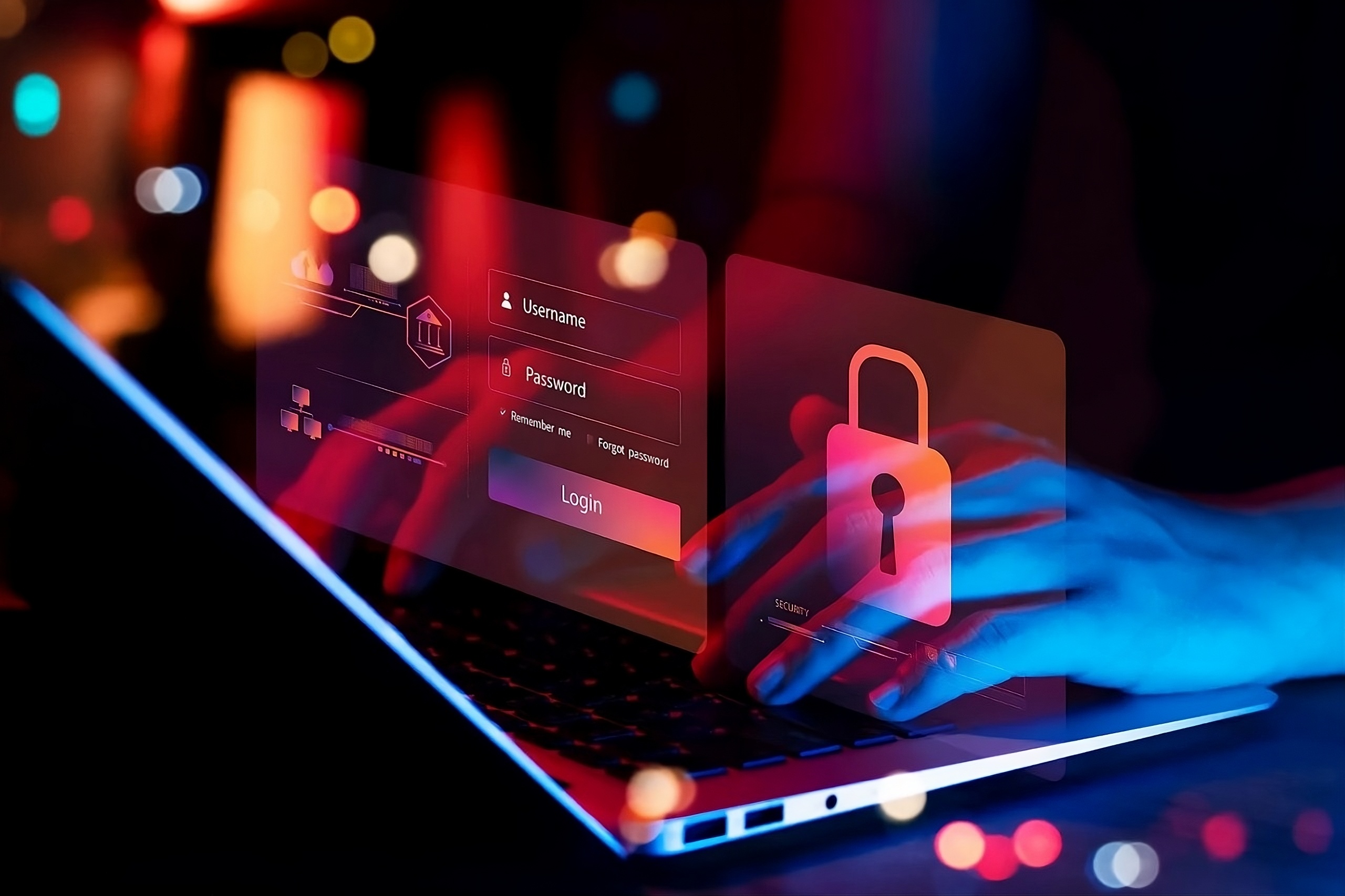
In the digital shadows, your data has become the new currency. This breach has flooded the market.
A Breach Beyond Imagination
It's easy for the number "16 billion" to feel abstract, a headline devoid of personal meaning. Let's ground it in reality. The world population is just over 8 billion people. This leak contains enough credentials to give every single person on Earth two separate digital identities. It's not just a data leak; it's a permanent contamination of the digital ecosystem. For years, the 2013 Yahoo breach that affected all 3 billion of its users was the benchmark for a worst-case scenario. This new megaleak, dubbed the "Mother of all Breaches" (MOAB) by researchers at Cybernews who made the discovery, is more than five times larger.
Crucially, this isn't a single hack. It's a "supermassive" compilation—a meticulously aggregated database from thousands of previous breaches and, more alarmingly, from active malware campaigns harvesting fresh data directly from infected devices worldwide. This data isn't old and stale; it's a living, breathing threat, structured and ready for immediate exploitation by cybercriminals of all levels.
Visualizing the Unimaginable
To truly grasp the scale, we must see it. The interactive 3D chart below visualizes the 16 billion record MOAB against other historic data breaches. The height of each bar represents the number of records compromised, in billions. Click and drag to rotate the view and see just how astronomically this new leak dwarfs all predecessors.
Interactive 3D Visualization: The MOAB (2025) vs. Historic Breaches. Data in Billions.
Anatomy of the Dark Web Supply Chain
What happens after your password is stolen? It doesn't just float in the void. It enters a sophisticated, multi-billion dollar underground economy where your identity is the commodity. This megaleak isn’t just being dumped online for free; it's a curated product, refined and sold through a chillingly efficient supply chain.
Phase 1: The Harvest via Infostealers
A significant portion of this fresh data comes from infostealer malware. These malicious programs, with names like RedLine, Raccoon, and Vidar, are the shock troops of data theft. They spread through deceptive emails ("Your package delivery failed"), pirated software, and malicious ads. Once on a victim's computer, they don't just steal one password; they perform a full data exfiltration, siphoning everything of value:
- Saved browser passwords and autofill data.
- Session cookies and tokens (which can bypass 2FA).
- Credit card numbers.
- System information and fingerprints.
- Cryptocurrency wallet files and seed phrases.
Phase 2: Aggregation and Resale on the Dark Web
Individual hackers and small groups sell these "logs" of stolen data on clandestine forums and marketplaces. Larger criminal enterprises, acting as data brokers, then buy them in bulk. Their "value add" is aggregation. They combine these logs with data from thousands of past server-side breaches (like the old LinkedIn or MySpace dumps). They then use powerful tools to "clean" the data—deduplicating entries, cracking weakly hashed passwords, and verifying which credentials still work. This refined, actionable database—the 16 billion records we see today—is the final product, sold to lower-tier criminals for use in widespread attacks.
The Cascade Effect: A Modern Nightmare
Consider a hypothetical but all-too-common scenario. Mark, a graphic designer, used a slightly varied password—Summer2023! on a gaming forum, Summer2024! for his Adobe suite, and MySummer2024! for his personal Gmail. He thinks he's being safe by not using the *exact* same password.
That gaming forum suffers a breach. An attacker buys the data and, seeing the pattern, uses an intelligent brute-force tool. It tries variations: `Summer2025!`, `MySummer2023!`, `Summer2024?`. In minutes, the tool guesses the Gmail password. From there, the attacker issues password resets for Mark's financial apps, accesses sensitive client files in his Google Drive, and sends fraudulent invoices from his email address. The breach of a low-value site has cascaded into a full-blown identity and financial crisis. This is the core danger of password reuse, even with minor variations.
Your Password Is a Dangerous Relic
For decades, we've been told the same tired advice: create "strong," "complex" passwords. But as former NSA cybersecurity expert Evan Dornbush states, "It doesn’t matter how long or complex your password is. When an attacker compromises the database that stores it, they have it." This breach proves his point on a global scale. The problem isn't your password's strength; it's the fact that it's a shareable secret stored on a server, waiting to be stolen. It is an archaic security model that has fundamentally failed.
This failure is why the entire tech industry—led by Apple, Google, and Microsoft under the banner of the FIDO Alliance—is making a unified, urgent pivot to a new standard: passkeys. The Google passwords leaked in this breach are a direct catalyst for this overdue revolution.
How Passkeys Shatter the Old Model
A passkey isn't a password. It's a modern cryptographic key-pair based on industry-standard public-key cryptography. One key (the public key) is stored on the website's server, and the other (the private key) is stored securely on your device's specialized hardware chip (like a Secure Enclave). They are mathematically linked, but the private key *never* leaves your device. To log in, you simply approve the request with your device's biometric scanner (Face ID, fingerprint) or PIN. No secret is ever transmitted or stored on a server. This simple change completely neutralizes the biggest threats of the last 20 years.
| Security Threat | Traditional Passwords | Passkeys |
|---|---|---|
| Server Breach Risk | High. If the server is hacked, your password hash is stolen and can be cracked offline. | Eliminated. The server only holds a useless public key. There is no secret to steal. |
| Phishing Risk | High. You can be tricked into entering your password on a convincing fake site. | Eliminated. A passkey is cryptographically bound to the real website's domain. It will refuse to work on a phishing site. |
| Password Reuse Risk | Catastrophic. A breach at one site exposes all other sites where the password was reused. | Eliminated. Every passkey is unique to each site by design, with no user effort required. |
The time for waiting is over. You can and should enable passkeys on your most critical accounts today. The process takes only a few minutes:
Building Your Digital Fortress: An Advanced Guide
While passkeys are the future, not every service supports them yet. To be truly secure, you must adopt a layered "defense in depth" strategy. This means creating multiple, redundant barriers to entry, so that even if one layer fails, others will protect you. This is the approach used by cybersecurity professionals to protect critical infrastructure.
Pro Tip: The MFA Security Ladder
Not all Multi-Factor Authentication (MFA) is created equal. Think of it as a ladder, with each rung offering exponentially better protection. Always choose the highest rung available.
-
Level 1 (Basic): SMS & Email Codes. Better than nothing, but fundamentally insecure. Vulnerable to SIM-swapping attacks and email account takeovers. Use this only when no other option exists, and recognize the risk.
-
Level 2 (Good): Authenticator Apps. Apps like Google Authenticator, Microsoft Authenticator, or Authy generate time-based codes on your device. Much more secure than SMS as they aren't tied to your phone number. This should be your minimum standard.
-
Level 3 (Excellent): Physical Security Keys. A YubiKey or Google Titan Key is the gold standard of MFA. These USB/NFC devices are virtually unphishable because they require physical presence and interaction. You must possess the key and touch it to approve a login. This is the level of security used by journalists, activists, and cybersecurity professionals for whom a breach is not an option.
Advanced Tools and Mentalities for the Post-Breach Era
Beyond MFA, integrate these powerful habits and tools into your digital life to shrink your attack surface:
- Use a Top-Tier Password Manager: For sites without passkey support, a manager is non-negotiable. Tools like 1Password, Bitwarden, or Proton Pass do more than store passwords. They are your new security command center: generating unique, random credentials for every site, auditing for weak or reused passwords, storing secure notes, and offering dark web monitoring.
- Implement Email Aliasing & Masked Emails: Stop giving every website your real email address. Use a service like SimpleLogin (from Proton), AnonAddy, or Apple's "Hide My Email" to create a unique email alias for every service (e.g., `[email protected]`). If that alias starts receiving spam or appears in a breach notification, you know exactly which company was breached or sold your data, and you can simply disable the alias without affecting any other account.
- Use Masked Credit Cards: Similarly, services like Privacy.com allow you to generate virtual credit card numbers for every online vendor. You can set spending limits or even make them single-use. If a merchant is breached, the stolen card number is useless, and your real financial information remains secure.
- Conduct a Digital Purge & Practice Data Minimalism: Think of all the old, forgotten accounts you have online. A forum from 2010, a photo app from 2015, a newsletter you signed up for years ago. These are liabilities. Use your password manager's breach report or a service like "Have I Been Pwned" to find old accounts tied to your email and actively delete them. The less data you have online, the smaller your attack surface.
You’re Not Safe Anymore
You may hear talk of cybersecurity being a "shared responsibility." Paul Walsh, CEO at the security firm MetaCert, calls this what it is: "pure BS from security vendors who still don't know how to protect their customers...and then blame people." The hard truth is that in an environment with 16 billion breached passwords actively circulating in the criminal underground, waiting for companies to achieve perfect security is a losing strategy. The responsibility to protect your digital life, your finances, and your identity falls squarely and unequivocally on you.
This event is more than a data breach; it is a paradigm shift. It marks the definitive, violent end of the password era. The only rational response is to assume any password you have ever used is compromised. Treating this moment with the urgency it demands by adopting passwordless technology and a "defense in depth" mindset is no longer optional. It is the essential price of admission to a secure life in the digital age. For more insights, exclusive stories, and real-time updates to stay ahead of the threats, explore Trendsnip and empower yourself with the knowledge to stay safe.
Latest Related News & Analysis
US Government Mandates Phishing-Resistant MFA for All Federal Agencies
In response to escalating nation-state attacks, a new CISA directive requires all federal government employees to use PIV cards or FIDO2-compliant hardware security keys, officially deprecating SMS and one-time password apps for sensitive systems.
Meet the Silent Killer of Online Security
A new report details how cybercriminals are increasingly focused on stealing browser session cookies, which allows them to hijack an active login session and bypass MFA, highlighting a critical flaw in legacy cookie-based authentication.
Is Your Email in the Latest 2 Billion Leak?
The popular breach notification service has integrated a massive new dataset sourced from infostealer malware logs, urging users to check their email addresses and immediately enable stronger, phishing-resistant security measures.
About the Author