From Importer to Innovator: India Eyes 3nm and 2nm Chips by 2032
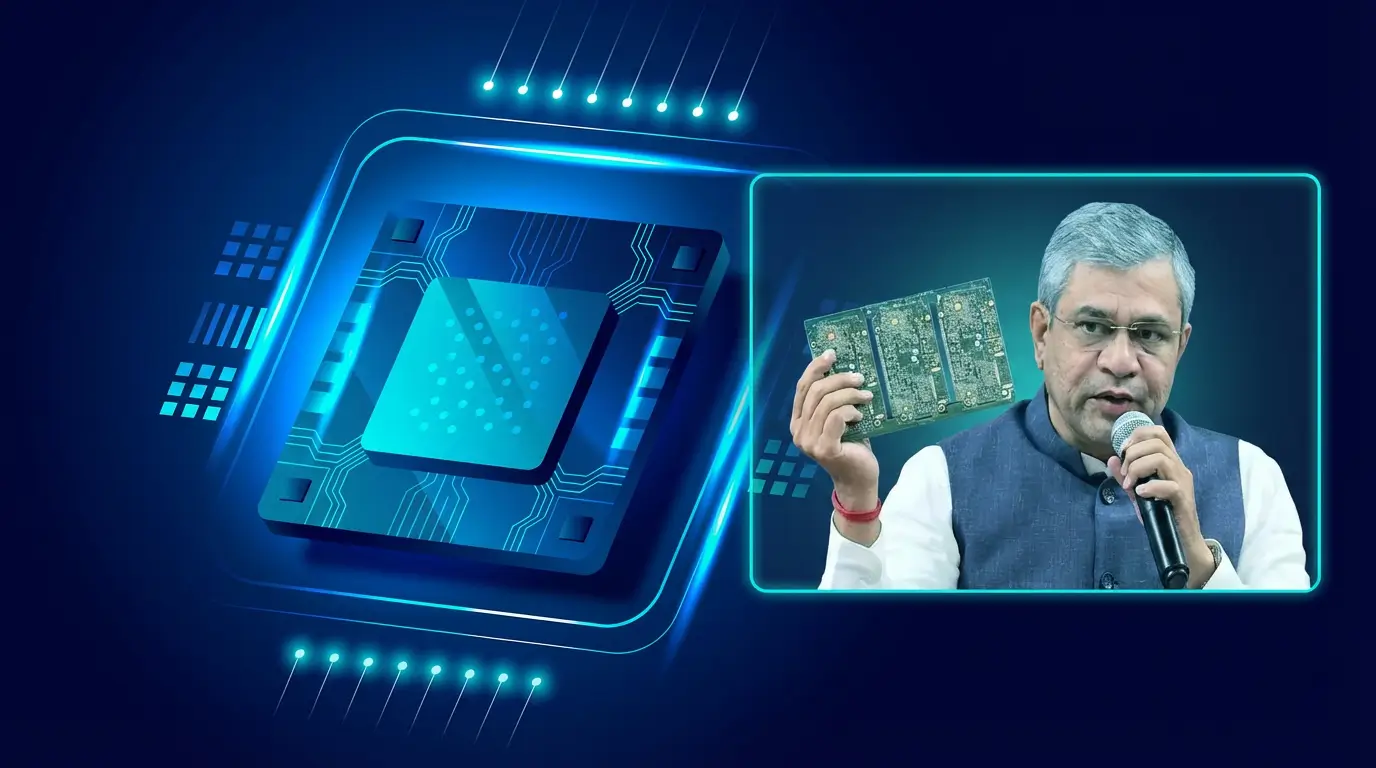
India Sets 2032 Goal for 3nm and 2nm Chip Manufacturing
India Eyes 3nm and 2nm Chips by 2032 to Challenge Global Leaders
India is setting its sights on becoming a global leader in advanced chip manufacturing, with plans to produce 3 nanometer chips by 2032 and push further to 2 nanometer technology shortly after. Union Minister for Electronics and Information Technology Ashwini Vaishnaw laid out this ambitious roadmap on January 27, 2026, during an event celebrating the fourth anniversary of the India Semiconductor Mission. Drawing inspiration from the success stories of South Korea, Taiwan, and Japan, the government aims to build a complete domestic ecosystem that covers design, fabrication, and assembly.
This announcement comes at a time when India’s semiconductor push is gaining real momentum. Four major plants from companies like Micron, Tata Electronics, CG Semi, and Kaynes are gearing up for commercial production this year, marking the shift from pilot runs to full scale output. By 2029, the country expects to handle 70 to 75 percent of its own chip needs for everything from defense systems to everyday consumer gadgets. Semicon 2.0, the next phase of the program, will drive these goals with focused investments and incentives.
Semicon 2.0: Roadmap to Advanced Nodes Like 3nm Chip Manufacturing and 2nm Technology
Semicon 2.0 builds directly on the foundation laid by the original India Semiconductor Mission launched in 2021 with a hefty Rs 76,000 crore outlay. The new phase zeroes in on scaling up to cutting edge nodes, starting with mature processes and racing toward 3nm semiconductor chips by 2032. Vaishnaw emphasized that by 2035, India could rank among the top four semiconductor nations worldwide, fueled by its vast talent pool and strategic partnerships.
Key milestones include ramping up design capabilities by 2029 to cover most domestic demands in 3nm chip design and beyond. Facilities like SCL Mohali will anchor tape outs for older nodes such as 180nm, while the Tata fab in Dholera handles down to 28nm. A massive Rs 4,500 crore upgrade for SCL Mohali, announced last year, will turn it into a hub for training, commercial production, and R&D, boosting India’s semiconductor manufacturing capabilities a hundredfold. This infrastructure push ensures India isn’t just importing chips but making them at home for electric vehicles, telecom gear, and defense applications.
The global semiconductor market, projected to hit $1 trillion by 2030, offers huge opportunities for India in areas like silicon carbide chips for renewables and AI processors. With approved investments topping Rs 1.6 lakh crore across 10 units, including two fabs and eight assembly test packaging sites, the ecosystem is ready for explosive growth.

Six Core Chip Categories: Building Blocks for Defense, Autos, and Railways
Under DLI 2.0, rolled into Semicon 2.0, the focus sharpens on six essential chip categories: compute, radio frequency or RF chips, networking, power management, sensors, and memory. These form the backbone for building complex systems, whether it’s missiles for defense, signaling tech for railways, or powertrains for automobiles. Vaishnaw noted that mastering these six areas lets India control 70 to 75 percent of technology products in strategic sectors.
Compute chips handle heavy processing tasks like AI inference, while RF chips are vital for 5G telecom and wireless comms. Networking chips manage data flows in routers and switches, power management ICs optimize energy in EVs and gadgets, sensors detect everything from motion to temperature, and memory chips store data efficiently. This targeted approach avoids spreading resources thin and mirrors how leaders like Taiwan prioritized key nodes early on.
By concentrating incentives here, the government aims to spawn at least 50 fabless firms, up from the current 24 under DLI 1.0. Startups get access to EDA tools, IP cores, and multi project wafers, speeding up from idea to silicon.
Scaling Up the Startup Ecosystem: From 24 to 50 Fabless Chip Designers
India’s fabless design scene is buzzing, with 24 startups already under DLI boasting tape outs, patents, and market traction. The goal is to double that to 50 plus in the next phase, creating a vibrant ecosystem of homegrown chip firms. Companies like Netra Semiconductor have taped out AI processors on TSMC’s 12nm node and are testing silicon, while InCore pushes RISC V based solutions born from IIT Madras’s Shakti project.
Vervesemi Microelectronics, a Bengaluru standout, develops ASICs for EVs, smart meters, and aerospace, with volume production eyed for 2026 27. They’ve exported IP and hold over 110 IPs, 25 ICs, and multiple patents. MosChip’s Vidyut chip integrates power management for indigenous energy meters, set for local fab runs soon. These successes validate the DLI model, which doles out 4 to 6 percent of net sales as incentives, capped at Rs 300 crore per firm.
Outcomes are impressive: 10 patents filed, 16 tape outs, six fabricated chips, 140 reusable IP cores, and over 1,000 trained engineers. Venture capital is flowing in, patents surging, and jobs multiplying as designs hit markets. Deep Tech Awards launching in 2026 across semis, AI, space, and biotech will spotlight innovators.

Manufacturing Milestone: Four Fabs Hit Commercial Production in 2026
2026 brings game changing news with four plants flipping to commercial mode. Kaynes and CG Semi, who piloted last year, lead the pack, followed by Micron’s Gujarat site and Tata’s Assam facility mid year. Micron’s OSAT plant targets memory packaging, Tata focuses on power semis for EVs, CG Semi handles assembly testing with Rs 7,600 crore investment, and Kaynes builds advanced nodes.
Cumulative investments hit Rs 41,863 crore under ECMS and Rs 1.6 lakh crore for Semicon units. This domestic sourcing will cut import reliance for autos and telecom giants, with exports on the horizon. SEMICON India 2025 showcased this progress, with a $1 billion Deep Tech Alliance for clean energy and quantum chips.
Talent and Infrastructure: 298 Universities Fuel the Chip Revolution
India’s edge lies in people power, with 298 universities now teaching chip design. SCL Mohali’s upgrade includes training centers for thousands, tying academia to industry via IITs and IISc. Over a million jobs by 2030 in design, fab, and support roles.
Facilities like Odisha’s SiC fab target EV and power electronics, positioning India in high growth niches. Global interest from Taiwan, Japan, and Korea underscores the pull.
Economic Impact: Jobs, Exports, and Atmanirbhar Bharat
This semiconductor drive promises one million jobs, better trade balances via exports, and self reliance in critical tech. From surveillance SoCs to IoT low power chips, designs span telecom, auto, space, and defense. By 2035, India eyes the top spot, powered by Semicon 2.0’s full value chain support.
Challenges remain, like skill gaps and supply chains, but with fabs online and startups thriving, the trajectory looks solid. As Vaishnaw put it, “By 2035, there is a global consensus that India will rank among the leading semiconductor nations.“
About the Author