Supreme Court Stays UGC’s 2026 Equity Regulations in Higher Education
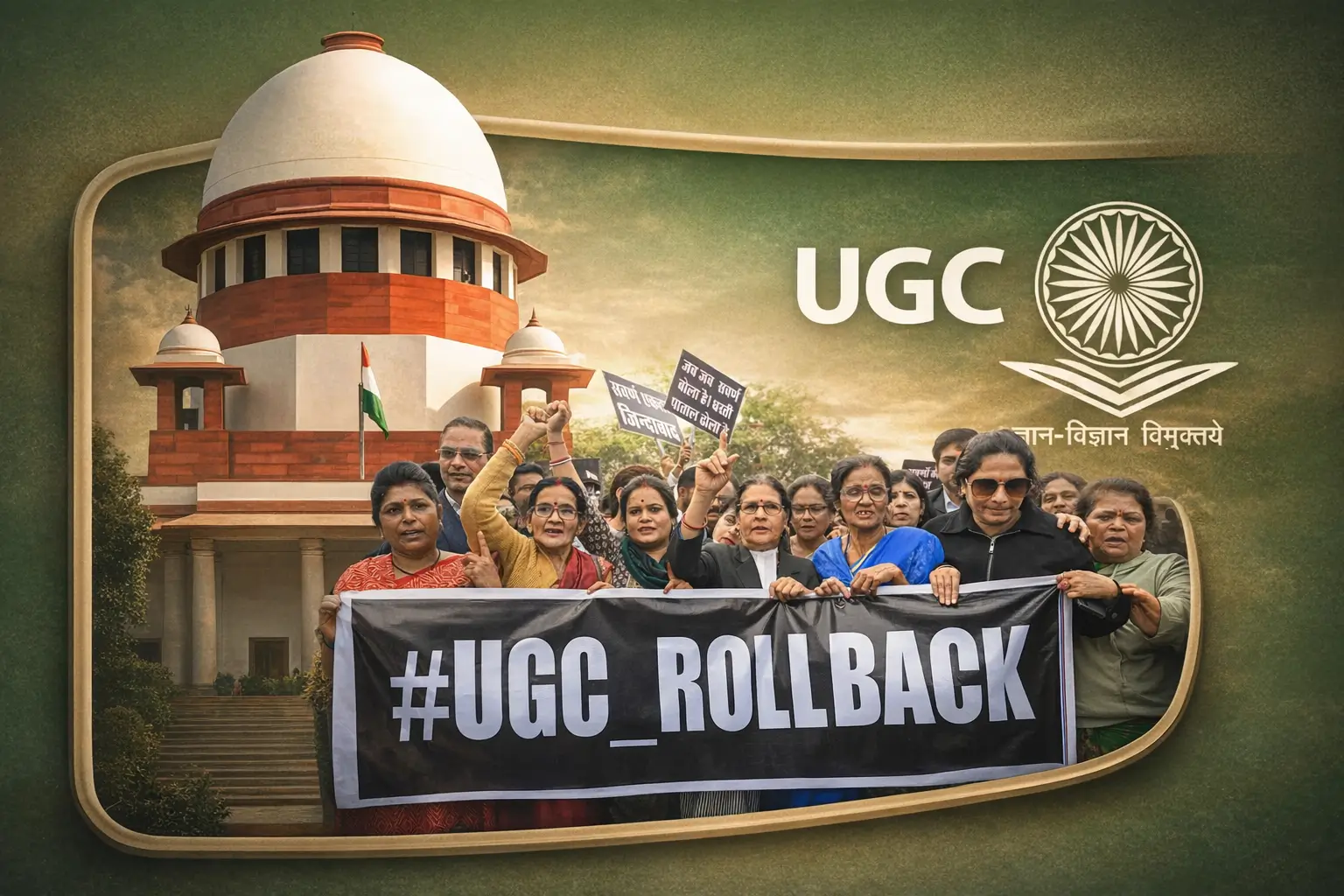
New Delhi, January 29, 2026: The Supreme Court on Thursday kept in abeyance the University Grants Commission’s newly notified Promotion of Equity in Higher Education Institutions Regulations, 2026. A bench headed by Chief Justice Surya Kant described the rules as “too sweeping” and said they needed a closer look before they could be implemented across colleges and universities.
For the time being, the court said, the older UGC (Promotion of Equity in Higher Educational Institutions) Regulations, 2012 will continue to apply. The bench also issued notice to the Union government and the UGC, seeking their response to petitions that challenge parts of the new rules.
What the Court Found Problematic
The main issue raised before the court was Regulation 3(c) of the 2026 regulations. This clause defines “caste-based discrimination” in a limited way as discrimination only against members of Scheduled Castes (SC), Scheduled Tribes (ST) and Other Backward Classes (OBC) on the ground of their caste or tribe.
Petitioners argued that this narrow definition leaves out students from the general category, even if they face hostility or abuse because of their caste. They said the rule creates a “hierarchy of victimhood” and goes against the constitutional guarantee of equality under Article 14.
The bench agreed that the provision appeared broad and required deeper examination. It decided to put the entire set of 2026 regulations on hold until the matter is fully heard.
Arguments Presented in Court
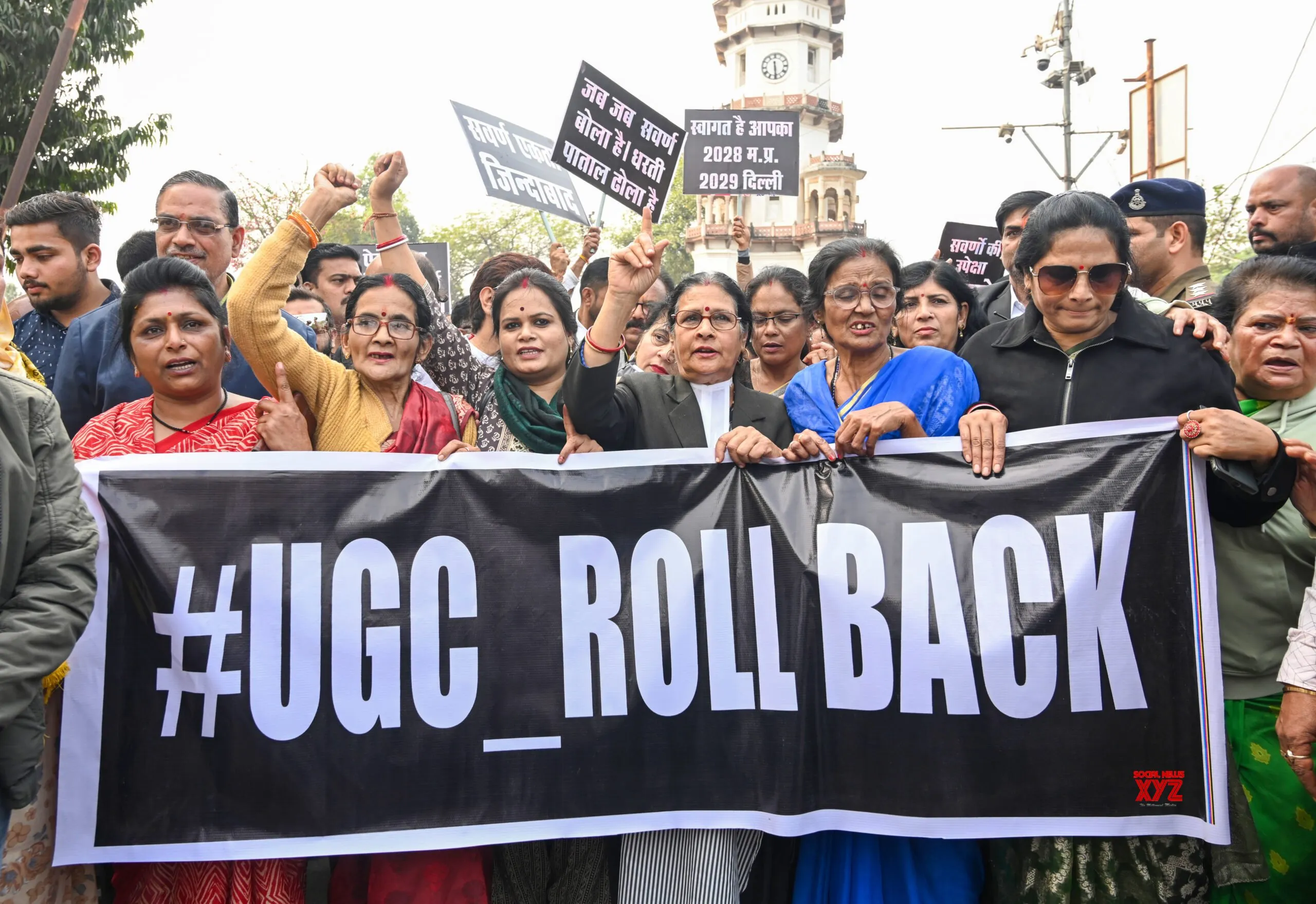
Three petitions filed by Rahul Dewan, Mritunjay Tiwari and advocate Vineet Jindal formed the basis of Thursday’s hearing. The petitioners said the new rules assume caste-based discrimination can only happen in one direction: from upper castes towards reserved categories.
They pointed out that social realities have changed over the years. In some cases, students from general category backgrounds also face caste-related prejudice, intimidation or exclusion on campus. By excluding them from protection, the regulations introduce a bias that has no rational basis, the petitions said.
Senior advocate Indira Jaising and advocate Prasanna S for interveners opposed any stay. They argued that the regulations address a very real problem continuing discrimination against students from Dalit and historically oppressed communities in higher education. Putting the rules on hold, they said, would weaken efforts to make campuses safer for these students.
Why the 2026 Regulations Were Brought In
The UGC notified the new regulations earlier this month with the aim of building a more inclusive academic environment, in line with the National Education Policy (NEP) 2020. The rules require every higher education institution to set up an Equity Advisory Committee to handle complaints of discrimination quickly and fairly.
They cover discrimination on multiple grounds caste, gender, religion, disability, region and more and lay down clear timelines for inquiry and action. The UGC said the regulations were needed because complaints of caste-based discrimination on campuses have risen sharply in recent years.
Data shared by the commission in the past has shown a significant increase in such cases, especially after high-profile incidents that highlighted the mental toll on affected students.
How the New Rules Differ from 2012
The 2012 regulations were the first major step by the UGC to promote equity in higher education. They asked institutions to set up Equal Opportunity Cells to guide students from disadvantaged backgrounds and sensitise the campus community.
The 2026 rules go further by making equity committees mandatory and spelling out detailed procedures for registering and resolving complaints. However, the narrower definition of caste-based discrimination has become the centre of controversy.
While the 2012 guidelines spoke generally of promoting equity and preventing discrimination, they did not limit protection against caste bias to specific categories in the same explicit way.
The Larger Debate on Caste Discrimination in Campuses
Caste remains a sensitive issue in Indian higher education. Students from SC, ST and OBC backgrounds have often reported facing subtle or open bias — from classroom interactions to hostel allocation and even evaluation of academic work.
Tragic cases in the past, such as the suicide of Hyderabad University scholar Rohith Vemula in 2016, brought national attention to the problem and led to stronger calls for institutional mechanisms.
At the same time, some sections argue that discrimination is not always one-sided. In a diverse country where social equations vary across regions and institutions, anyone can become a target of prejudice based on caste identity.
Critics of the 2026 definition say it ignores this complexity and risks being used selectively, while supporters insist that historical disadvantage faced by reserved categories justifies focused protection.
The Supreme Court has stayed the UGC’s 2026 Equity Regulations, calling them ‘too sweeping’. The Court ruled that the 2012 regulations will continue to apply until further orders.
— Sikho Ai (@SikhoAi) January 29, 2026
Follow @SikhoAi pic.twitter.com/tzzAcB4q9s
What the Stay Means for Students and Institutions
With the Supreme Court’s interim order, colleges and universities will continue to follow the 2012 framework for now. Complaints of discrimination will still be addressed through existing equal opportunity cells or grievance mechanisms.
The stay has drawn mixed reactions. Some student groups and political leaders have welcomed it, saying it prevents possible misuse of broad provisions. Others have expressed concern that delaying stronger rules could leave vulnerable students without adequate safeguards.
The matter is likely to be taken up again after the government and UGC file their replies. Until then, the balance struck by the 2012 regulations remains the guiding framework.
Higher education institutions across the country will be watching the case closely, as the final outcome will shape how campuses handle complaints of discrimination in the years ahead.
The Supreme Court’s decision underlines the delicate task of drafting rules that protect the marginalised without appearing to exclude others. Finding that balance will require careful consideration of both historical context and present-day realities.
About the Author