Supreme Court Makes TET Mandatory for Teachers to Keep Jobs
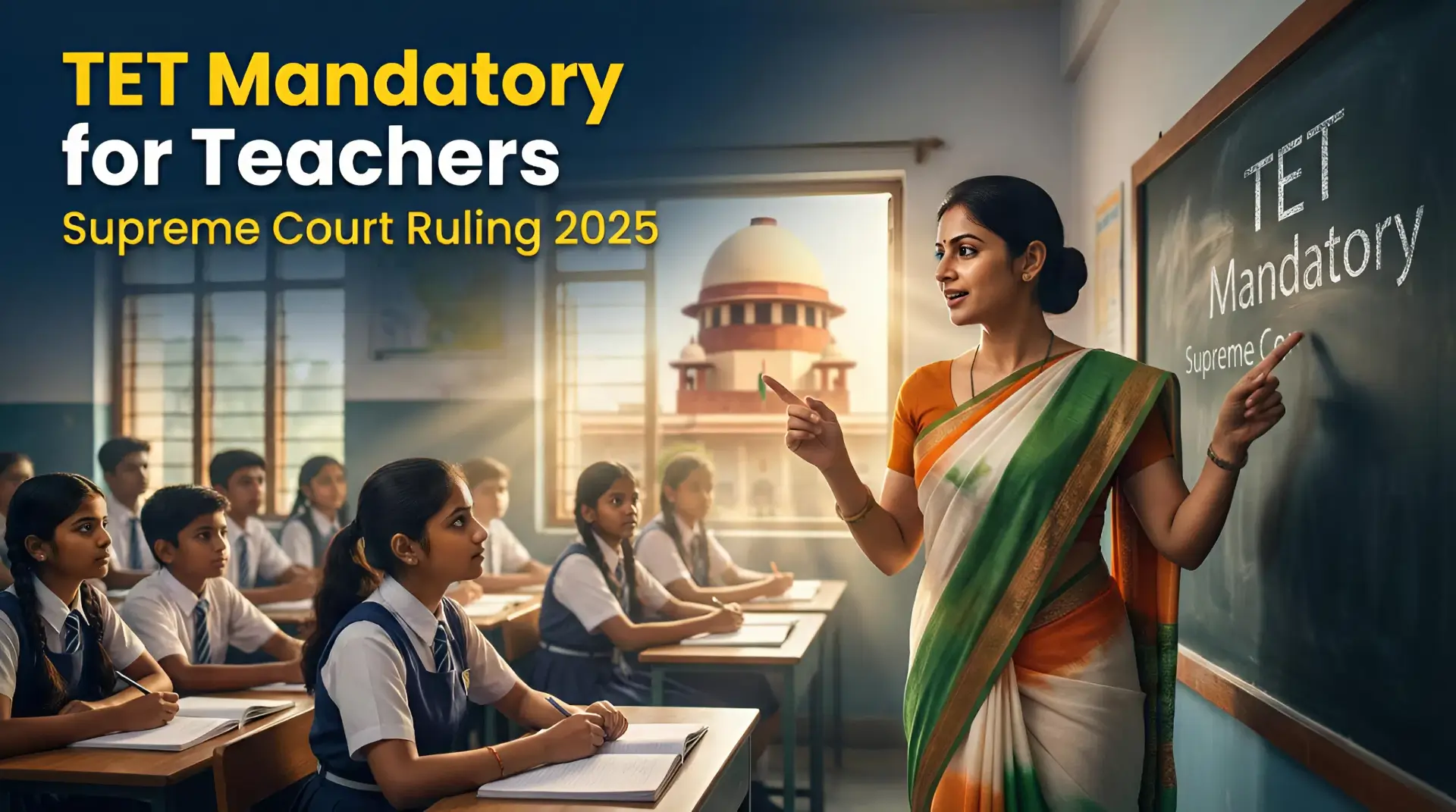
Supreme Court makes TET mandatory for teachers, offering limited relief to those near retirement while blocking promotions without clearing the exam.
Supreme Court Makes TET Mandatory for Teachers to Keep Jobs
New Delhi: The Supreme Court has settled a long-running worry for lakhs of school teachers across India passing the Teacher Eligibility Test (TET) is now a must to hold on to their jobs. But there is some good news for older teachers close to retirement.
In a clear order passed in September 2025, the top court said TET is an “essential qualification” under the Right to Education (RTE) Act. No teacher, even if appointed long before the rule came in, can stay in service forever without clearing it. The central government has told Parliament it will stick to this decision and won’t make any separate exemption policy.
What Led to This Decision?
The confusion started after the RTE Act came into force in 2009. To make sure children get good teachers, the National Council for Teacher Education (NCTE) issued guidelines in 2010 and 2011 saying anyone wanting to teach classes 1 to 8 must pass TET – a central or state-level exam that checks basic teaching skills.
Thousands of teachers had already been hired before these rules, especially before 2011. Many states and teachers went to court asking for relaxation, saying years of experience should count instead. Lower courts gave different verdicts, so the matter reached the Supreme Court.
In its September 2025 judgment, the court made it clear: quality of education comes first. TET cannot be skipped just because someone was appointed earlier.
Rules Based on Years Left in Service
The court used its special powers under Article 142 to give practical guidelines and avoid sudden hardship.
- If a teacher has more than five years left before retirement, they must pass TET within two years from the date of the judgment. If they don’t, they can be asked to leave or compulsorily retired with full benefits.
- Teachers with less than five years to go get relief. They can continue working till they retire, even without passing TET. This protects senior teachers who are close to the end of their career.
The court said this balance ensures schools don’t lose experienced hands overnight while still pushing for better standards.
No Promotion Without TET
One rule applies to everyone, no matter how many years they have left: promotions are completely blocked without TET.
Whether you want to move from primary to upper primary, become a head teacher, or get any higher post, clearing TET is now compulsory. Many teachers who have served 15-20 years are upset about this because it stops their career growth even if their job is safe.
Government’s Stand
When asked in the Lok Sabha, the Education Ministry said the Centre fully accepts the Supreme Court order. No new national policy or blanket exemption is being planned for pre-2011 teachers. States have been told to follow the ruling while conducting fresh TET exams.
Several states have already held special TET rounds. In Maharashtra, a record 4.75 lakh candidates appeared in late 2025. Similar drives are on in Uttar Pradesh, Andhra Pradesh, Tamil Nadu and other places.
Supreme Court Makes TET Mandatory for Teachers to Keep Jobs
— Sikho Ai (@SikhoAi) February 11, 2026
Court gives relief to teachers with less than five years left till retirement, but no promotion without clearing TET; government says it will follow the ruling fully.https://t.co/fAfhZMRvBD pic.twitter.com/1fkCBozUcs
Teachers’ Reactions and Worries
Teacher unions are not happy. Many say senior teachers, especially in rural areas, will find it tough to prepare for TET after years away from exams. There are protests in Punjab, Telangana, Andhra Pradesh and Delhi demanding relaxation in passing marks or syllabus.
In Tamil Nadu, Chief Minister MK Stalin wrote to Prime Minister Narendra Modi asking for changes in the RTE and NCTE laws to protect affected teachers. Unions estimate around 25-30 lakh teachers across the country could face problems if they don’t clear the test in time.
Some education experts worry that if large numbers fail, classrooms could be left empty, especially in government schools already short of staff. Others argue the rule will improve teaching quality in the long run.
What Happens Next?
States are now busy organising more TET exams and training camps to help in-service teachers prepare. The court has left it to governments to give reasonable support, like study leave or coaching.
For new teachers, TET was already compulsory. Now even old hands have to treat it seriously. Teachers affected by the five-year rule have roughly until mid-2027 to clear it, depending on exact dates.
The message is straightforward: TET is here to stay as the basic benchmark for anyone teaching young children. While the court has shown understanding for those near retirement, everyone else has to gear up.
This ruling affects government, aided and even some private schools covered under RTE. Minority institutions have separate cases going on, but for most regular schools, the rules are firm.
Teachers now have a clear path ahead prepare, appear, and pass. The next few years will decide how smoothly this big change rolls out across India’s classrooms.
About the Author