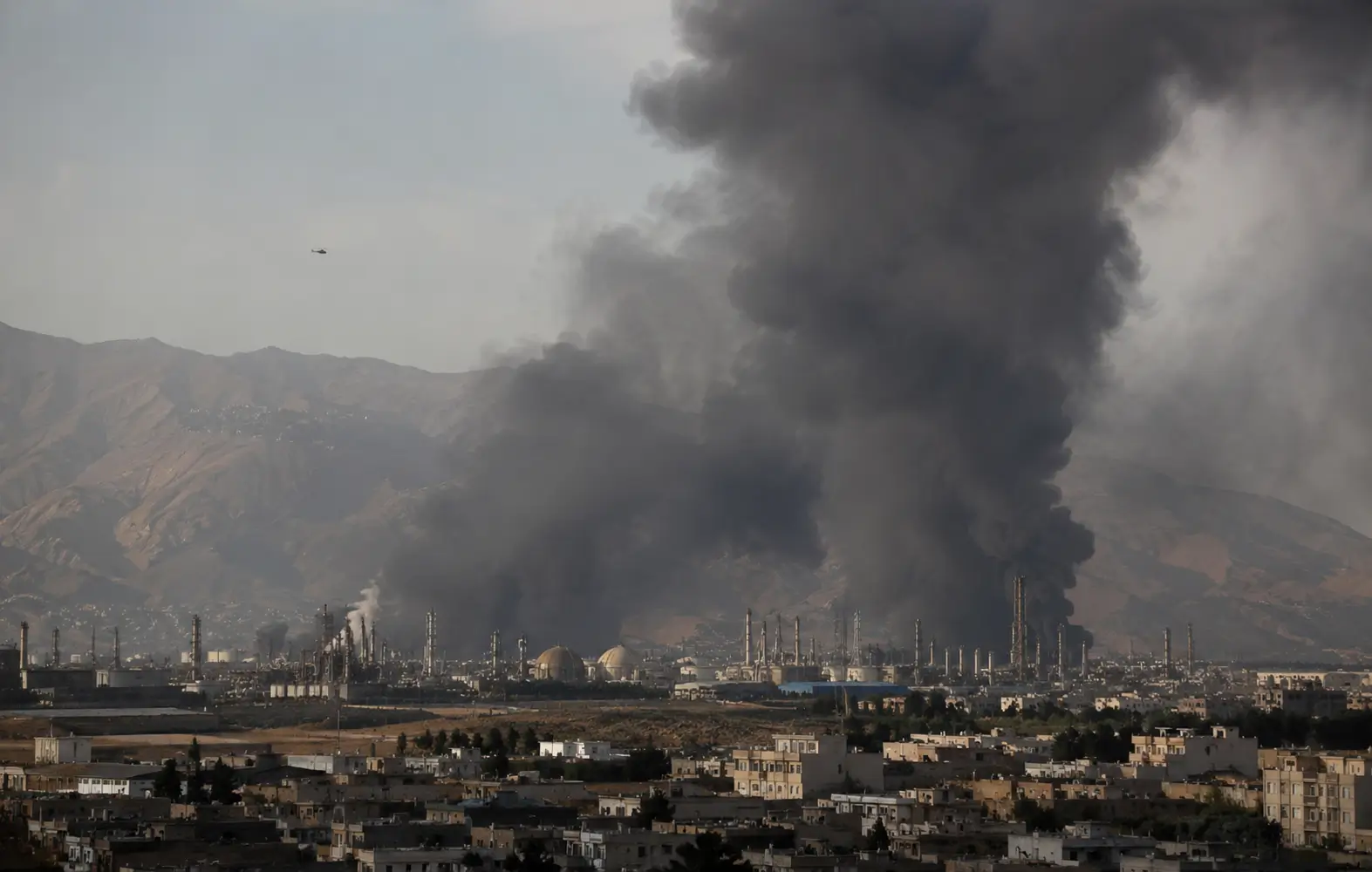
WASHINGTON / TEHRAN — It has been exactly 76 days since the skies over the Middle East first lit up with the terrifying glow of intercepted missiles. The situation on the ground is deteriorating rapidly. What began on February 28 as a "pre-emptive" joint military strike by the United States and Israel to neutralize Iranian defence and nuclear networks has now escalated into a full-scale, grinding war of attrition.
As of Friday, May 15, 2026, the Middle East is facing an unprecedented crisis. The shadow warfare that defined relations between these nations for decades has been replaced by open, daily military conflict. Large parts of Tehran continue to experience severe power grid collapses, and the economic shockwaves are battering global markets. Asian economies, particularly heavily import-reliant nations like India and China, are feeling the immediate and harsh pinch of soaring energy costs.
Fierce Interceptions Over Gulf Military Bases
Early Friday morning, air raid sirens wailed across several Gulf nations. Iran's supreme military command launched a fresh, heavily coordinated swarm of ballistic missiles aimed directly at Western military bases stationed in neighbouring countries. Local news networks and early reports indicate that the Al-Salem Air Base in Kuwait and the US Fifth Fleet Headquarters in Bahrain faced renewed and intense pressure.
Regional Patriot and Arrow air defence systems were heavily engaged throughout the night to intercept the incoming salvos. Residents in Manama, Bahrain, reported hearing massive explosions overhead as the defense systems collided with the incoming Iranian projectiles. The night sky was repeatedly lit up by the flashes of these high-altitude interceptions.
While official military casualties remain closely guarded secrets by all involved nations, independent defence analysts note that the sheer volume of the daily missile exchanges is rapidly depleting regional air defence stockpiles. Neither side has managed to achieve total air superiority, leading to a devastating and expensive stalemate.
"We are witnessing a level of sustained aerial bombardment not seen in the region since the Gulf War. The continuous exchange of fire is straining the logistical supply chains of all involved militaries," reports the Associated Press (AP) in their latest morning dispatch from the region.
The Strait of Hormuz Naval Blockade
The conflict is no longer confined to the skies. It has bled heavily into the maritime domain, creating a severe crisis for global trade. Naval forces have effectively closed off high-risk sectors in the Strait of Hormuz, a narrow bottleneck that serves as the most critical energy transit route in the entire world.
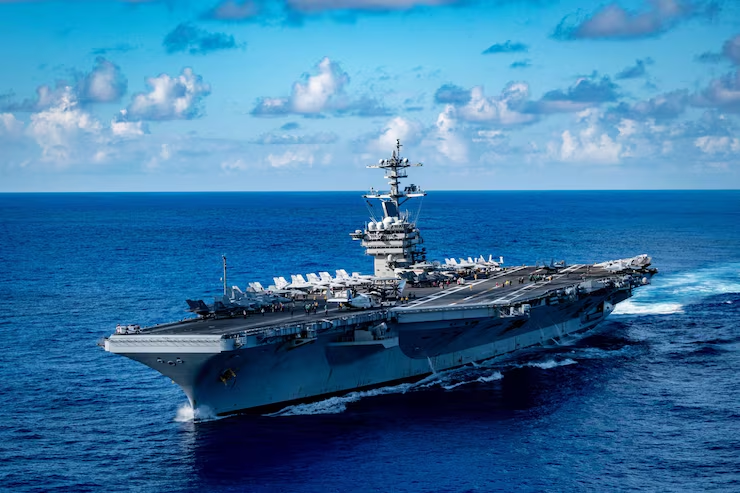
International shipping corporations are refusing to send their cargo ships and oil tankers through the conflict zone. Instead, massive container ships are currently being rerouted entirely around the continent of Africa—specifically the Cape of Good Hope. This massive detour adds weeks to delivery times and is skyrocketing global freight costs, the burden of which is already being passed down to everyday consumers at the grocery store.
Global Oil Market Panic: Crude Spikes Past $120
The immediate result of the naval blockade has been pure panic on the global stock exchanges. Today, the global crude oil market reacted violently to rumors circulating about a permanent closure of Iranian export terminals and the destruction of nearby oil refining infrastructure.

Within hours of the morning bell, Brent crude prices spiked instantly to over $120 per barrel—a historic high that threatens to undo years of economic recovery efforts globally. Petrol prices at the pump are expected to surge over the weekend in the United States, Europe, and Asia.
According to a recent financial analysis published by Reuters, "The sustained closure of the Strait of Hormuz could effectively remove millions of barrels of oil per day from the global market. There is simply no backup plan for a disruption of this magnitude." This energy crisis is forcing governments worldwide to tap into their emergency strategic petroleum reserves, a measure that offers only temporary relief.
The Humanitarian Crisis and Civilian Toll
Beyond the economic numbers, the human cost of this 76-day war is staggering. The scale of destruction has caused immense civilian distress across major urban centres in Iran. Water purification plants have been damaged, and basic medical supplies are running dangerously low due to the strict embargoes placed on incoming cargo flights.
The memory of the February 28 strikes remains a raw, painful wound for the nation. On the first day of the conflict, an educational zone in the southern city of Minab was struck by a missile. The strike led to the confirmed deaths of 42 young school children. The images of rescue workers pulling backpacks from the rubble sparked global outrage and massive protests in major cities around the world, from London to New York.
Today, local hospitals in Tehran and surrounding provinces remain overwhelmed. Doctors report working 36-hour shifts, often performing surgeries with limited electricity provided by backup diesel generators. Multiple foreign nations have issued "Do Not Travel" advisories and initiated massive emergency evacuation protocols to rescue their citizens trapped in the crossfire.
US Domestic Response & Military Draft Preparations
Back in Washington D.C., the prolonged nature of the conflict is forcing a massive strategic pivot. The Pentagon has placed all regional reserve forces on high alert, and military leave has been cancelled for personnel stationed in the European and Central Commands.
The sheer scale of the operation has sparked intense domestic debate in the United States regarding troop deployments. Preparing for a drawn-out global engagement that could last years, the US administration has taken highly controversial steps domestically to ensure troop numbers do not fall.
The Rise of Drone Warfare and Geopolitical Alliances
A defining characteristic of this specific conflict is the heavy, almost total reliance on unmanned aerial vehicles (UAVs). Traditional fighter jets are rapidly being supplemented—and in some dangerous missions, entirely replaced—by swarms of kamikaze drones. Both the US-Israel coalition and Iranian forces are utilising these cheap, highly effective weapons to target expensive radar installations and logistical hubs.
The tactics seen in the Gulf today mirror advancements seen recently on other battlefields. The deployment of loitering munitions is reshaping modern combat entirely. Military analysts note that the introduction of advanced tech, much like the Turkey Mizrak kamikaze drones, has forced traditional armies to completely rethink how they defend airspace.
Internationally, the direct military confrontation has forced global superpowers to choose sides, effectively ending an era of neutral diplomacy. The United Nations Security Council remains completely deadlocked. Last week, an emergency ceasefire resolution proposed by Russia and China was swiftly vetoed by the United States and the United Kingdom. Western powers cited Iran's refusal to dismantle its forward-operating missile bases as the reason for the veto.
As Al Jazeera reported in their evening broadcast, "The hardening of these alliances—with Washington backing Israel, and Beijing and Moscow increasing logistical support for Tehran—feels terrifyingly reminiscent of historical Cold War dynamics, but with modern, devastating weaponry."
As the war approaches its third month, the hope for a peaceful diplomatic resolution seems further away than ever. Citizens on the ground continue to brace for the sound of the sirens, while the rest of the world watches the oil ticker climb ever higher.
Frequently Asked Questions About the Conflict
When did the US-Israel-Iran war start?
The direct military conflict officially began on February 28, 2026. It started when the United States and Israel launched heavily coordinated joint airstrikes on military targets and defense infrastructure located in and around Tehran.
Why are global oil prices rising so fast?
Oil prices have surged past $120 per barrel largely because naval forces have blocked key shipping routes in the Middle East. The Strait of Hormuz, a critical bottleneck for global oil transport, is currently too dangerous for commercial vessels to pass, creating immense fear of a global supply shortage.
Which US military bases were targeted by Iran?
In retaliation to the initial airstrikes, Iran has fired multiple waves of ballistic missiles at several bases hosting Western troops. The primary targets hit include the Al-Salem Air Base in Kuwait and the US Fifth Fleet Headquarters located in Bahrain.
What happened at the Minab school in Iran?
During the very early days of the conflict in late February, a missile tragically hit a girls' elementary school in the southern Iranian city of Minab. The strike resulted in the deaths of 42 students. It remains one of the highest civilian casualty events of the war and sparked global outrage.
How is the Strait of Hormuz naval blockade affecting trade?
The blockade has effectively stopped commercial cargo ships and oil tankers from safely passing through the Gulf. Shipping companies are forcing their vessels to take massive detours entirely around the continent of Africa. This disruption is causing massive delays in global supply chains and significantly increasing shipping costs.
What is the stance of the United Nations on this conflict?
The United Nations Security Council is currently deadlocked and unable to pass actionable resolutions. Calls for an immediate ceasefire, largely proposed by nations like Russia and China, have been blocked by vetoes from the US and UK, leaving diplomatic peace efforts completely frozen.
Are commercial flights still operating in the Middle East?
No, most commercial aviation in the active conflict zones has been completely halted. Many surrounding countries have closed their airspace to civilian passenger flights to prevent the risk of planes being accidentally targeted by nervous air defence systems.
Will the US implement an automatic military draft in 2026?
Due to the rapidly expanding scale of the conflict and the need to maintain troop readiness, the US administration has indeed taken controversial legislative steps toward implementing automatic military draft registration for eligible citizens in 2026.
Reporting by: SikhoAI News Desk. Factual reporting aligned with global press standards. Information sourced from field reports and international wire services including AP, Reuters, and Al Jazeera as of May 15, 2026.