Delhi Police Arrest Salim Vastik After 25 Years in Hiding
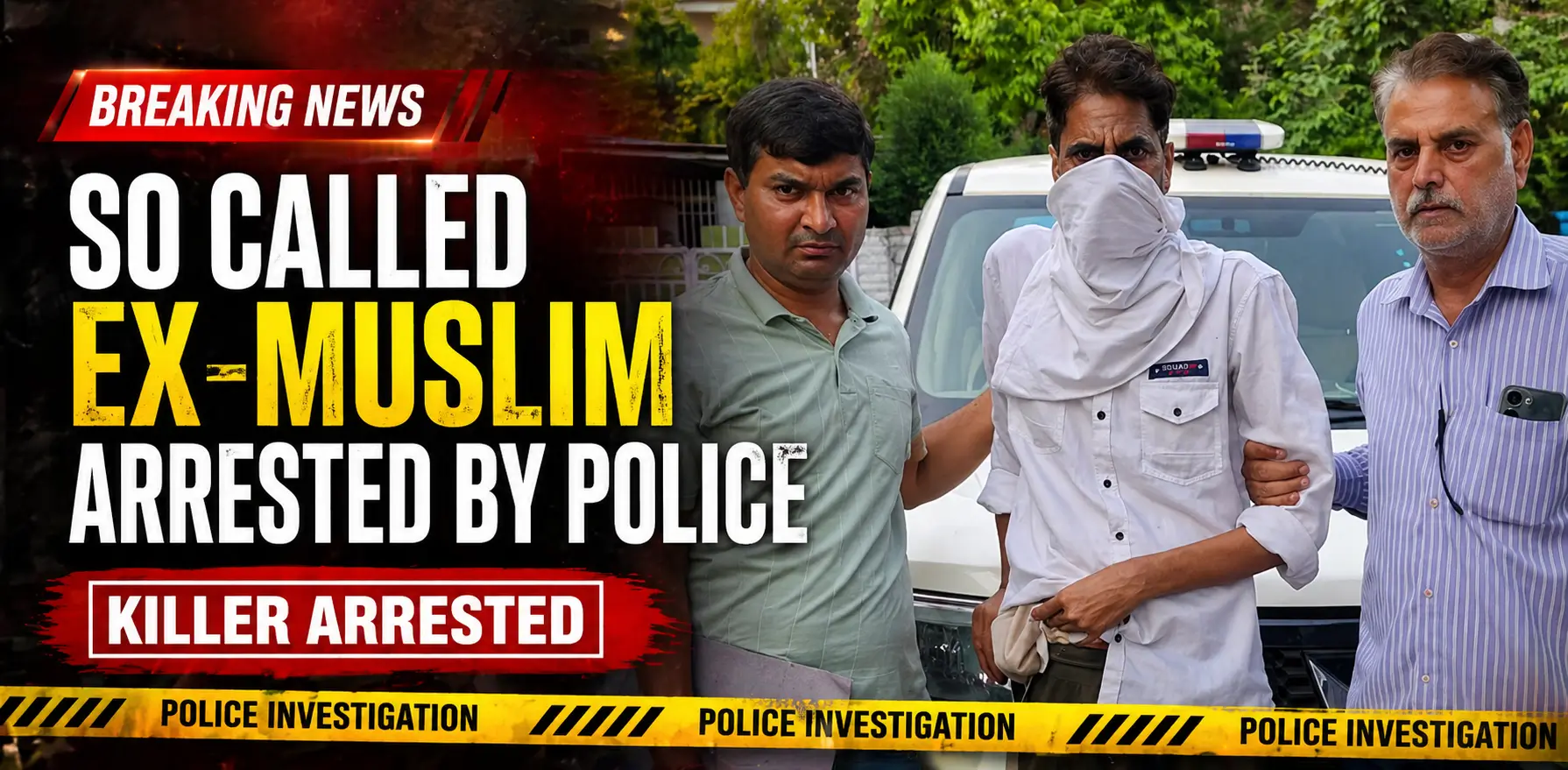
Delhi Police detain Salim Vastik in Ghaziabad, ending a 25-year manhunt linked to a 1995 kidnapping and murder case.
25 Years on the Run, Delhi Police Finally Arrest
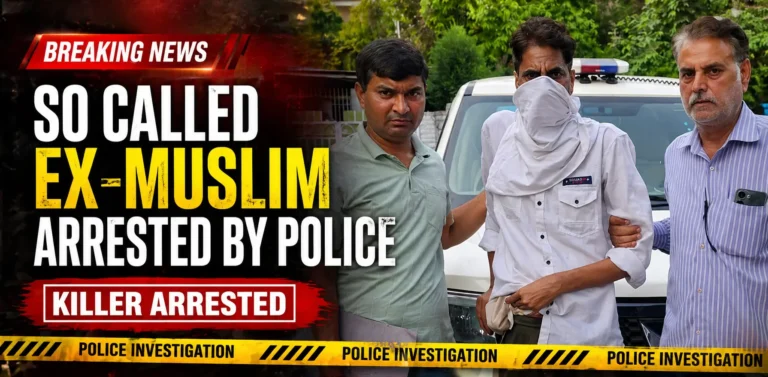
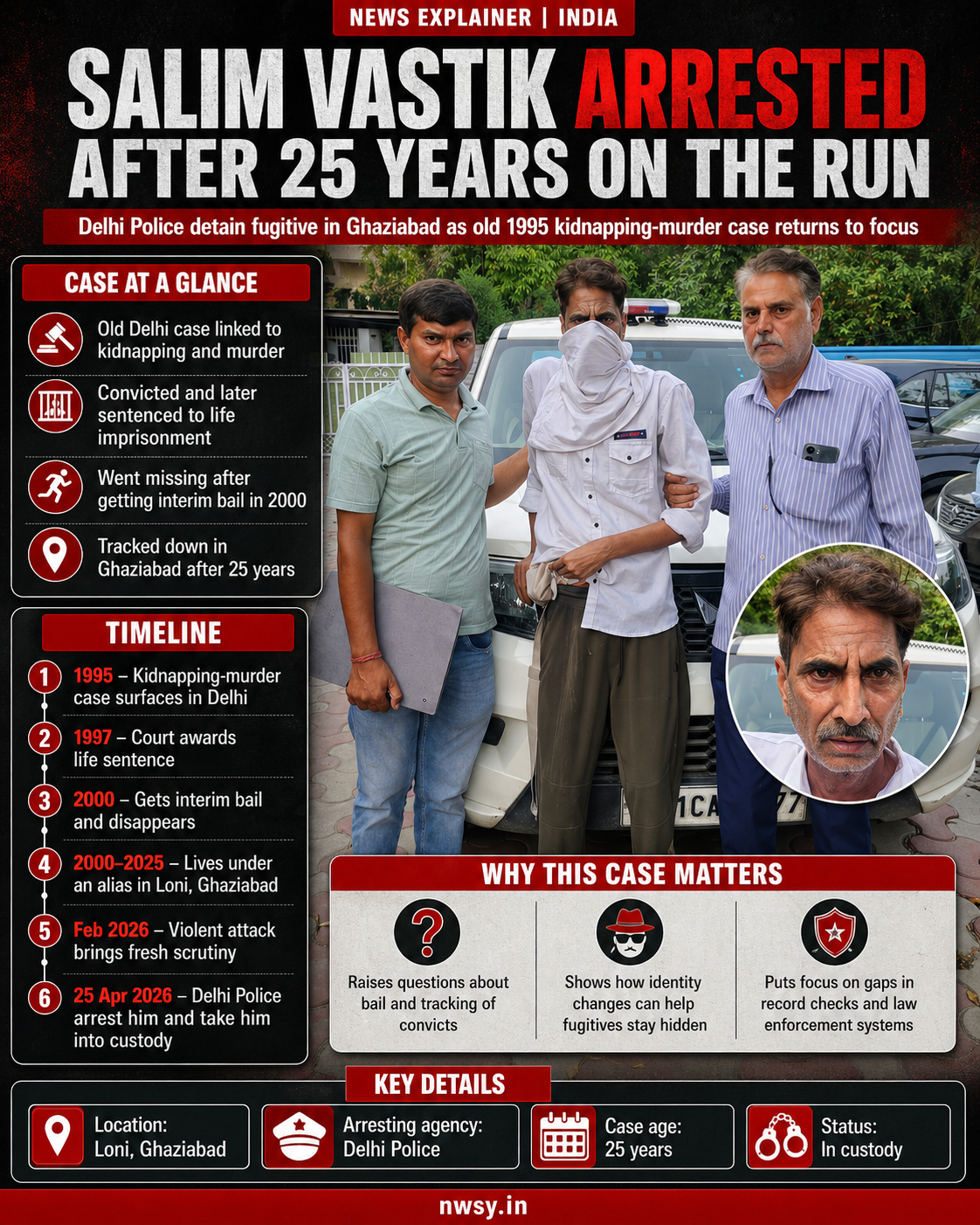
Delhi Police arrested Salim Vastik on April 25, 2026. He was a life-term convict. He had been running from the law for 25 years. The arrest happened in the Loni area of Ghaziabad. Police picked him up early in the morning. He did not resist.
Salim Vastik, whose real name is Salim Khan, was convicted for a kidnapping and murder in Delhi. He got a life sentence in 1997. In 2000, he came out of jail on parole. He never went back. That day, he became a fugitive for 25 years.
Now he is back in Tihar Jail. The Salim Vastik arrest has become a major talking point in Delhi crime news. People are asking one simple question. How did a convicted murderer stay free for so long?
Crime That Started It All
The year was 1995. A 13-year-old boy from a business family in Delhi’s Gokulpuri area was kidnapped. He was taken while going to school. The kidnappers called the family. They demanded ransom money. But the situation took a dark turn. The boy was killed.
The crime shook Delhi. Police investigated the case. They arrested two men. One was Salim Khan. He later came to be known as Salim Vastik. The case went to trial. The court found him guilty of kidnapping and murder. In 1997, he was given a life sentence.
Life sentence means the convict spends the rest of his natural life in jail. It is reserved for the most serious crimes. Salim Vastik was sent to Delhi’s Tihar Jail. The law had taken its course. Or so everyone thought.
How a Life-Term Convict Got Parole and Escaped
Three years into his sentence, something unexpected happened. In 2000, Salim Vastik got parole from the high court. Parole is a temporary release from jail. It is given for reasons like family emergencies or health issues.
But this was a man serving a life sentence. The crime was kidnapping and murder of a child. So how did he get bail after life sentence so easily? This question still has no clear answer.
Salim Vastik walked out of Delhi jail. Parole comes with a condition. The prisoner must return on a fixed date. Salim Vastik had no intention of returning. The moment he stepped out, he disappeared. He became an escaped convict. The year was 2000. He would not see the inside of a jail for the next 25 years.
25 Years of Hiding Identity in Plain Sight
Where does a man go after escaping a life sentence? Salim Vastik did not go far. He moved around nearby districts. He stayed in Shamli for some time. Then Meerut. Finally, he settled in Ghaziabad. He chose the Loni area. It is just a short drive from Delhi. He was hiding right next to the city where he committed the crime.
But he did not use his real name. Salim Khan became Salim Ahmed. He also used the surname Vastik. This identity change was his main shield. With a new name, he could live like any other ordinary person.
He opened a small shop. He sold women’s clothes. It was a modest business. Nothing that would draw attention. He became a familiar face in the Loni market. Neighbours knew him as a quiet shopkeeper. No one suspected anything.
Hiding identity for two and a half decades took careful planning. He never used his real name for any official document. He did not open bank accounts that could be traced. He avoided any work that required a background check. He moved houses every few years. If someone asked about his past, he gave vague answers. Sometimes he even spread a rumour that he had died. He wanted the police to close his file.
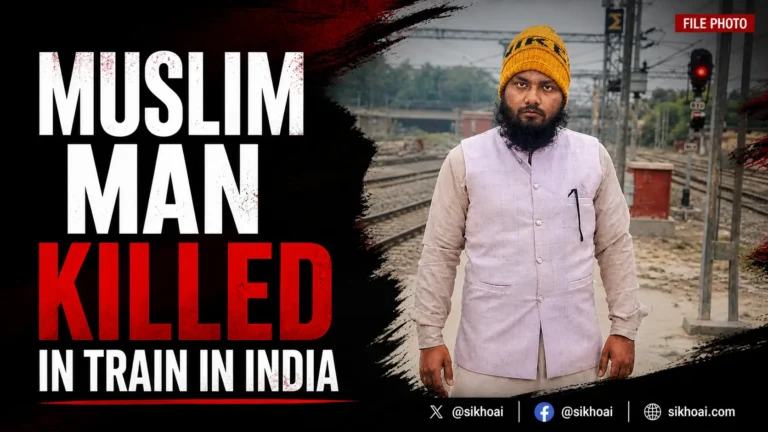
And yet, in recent years, he did something strange. He started a YouTube channel. He began making videos online. He spoke about being a former Muslim convict who had changed his faith. His face was on the internet. People watched his videos. He had an audience. He was hiding in plain sight. The escaped convict had become a YouTuber.
But no one connected the face on YouTube to the old kidnapping and murder case. The system did not catch him. The Salim Vastik story was unfolding openly, yet it remained hidden.
Attack That Exposed Everything
Then came February 2026. A violent attack cracked the case wide open.
On February 27, Salim Vastik was in his office in Ghaziabad. Two young men entered. They carried sharp weapons. They attacked him brutally. They cut his throat. They stabbed him repeatedly in the stomach and neck. The assault was captured on CCTV. The video later surfaced and spread quickly.
Salim Vastik survived. He was rushed to the hospital in a critical condition. Doctors treated him for many days. He was lucky to be alive. The attack was clearly an attempt to murder him.
Ghaziabad Police started investigating. They checked the CCTV footage. They identified the attackers. Their names were Zeeshan and Gulfam. They were real brothers. Reports said they held radical views and were angry about Salim Vastik’s ex-Muslim identity.
What happened next raised even more questions.
Police went after the attackers. Within days, both brothers were killed in separate encounters. This Ghaziabad encounter happened very fast. One after the other, Zeeshan and Gulfam were shot dead by police.
This police encounter left a gaping hole in the investigation. Why were the attackers killed before they could be properly questioned? Who sent them? Was there someone else behind the attack? Now no one can answer these questions. The two men who knew the motive are dead. This has led many to question the system failure in handling this case.
How Delhi Police Finally Cracked the Case
The murder attempt on Salim Vastik brought him under police scrutiny. Until then, he was just a small shopkeeper who got attacked. But when police started digging into his past, things did not add up.
They opened old files. They checked his background. They looked at fingerprints. They matched photographs from 1995 with his current appearance. Slowly, the pieces came together. The YouTuber from Loni was not who he claimed to be. He was Salim Khan alias Salim Vastik. The missing life-term convict. The fugitive for 25 years.
Delhi Police were informed. A special team was formed. They gathered all evidence carefully. They cross-checked records. They made sure there was no mistake about his identity. Then they planned the arrest.
On the morning of April 25, 2026, the team moved in. They reached his house in Loni, Ghaziabad. They knocked on the door. When Salim Vastik opened, they took him into custody. The arrest was peaceful. He did not try to run. Perhaps after 25 years, he knew the chase was over.
Delhi Police took him straight to Tihar Jail. The same jail he had walked out of in 2000. The circle was complete. The escaped convict was back where he belonged.
Delhi Police officials said they used both old records and new technology to trace him. The attack acted as a trigger. It forced them to look at him closely. One case led to the solving of an older, bigger case.
Salim Vastik Arrested 🚨 "so-called Ex-Muslim" activist is actually a 1995 murder convict who jumped bail 25 years ago.
— NewsIQ (@NewsIQUS) April 25, 2026
Delhi Police finally caught him hiding in Ghaziabad after his social media fame unraveled his secret. https://t.co/jVqNTkrarF
Questions That Still Need Answers
The Salim Vastik arrest closes a 25-year-old manhunt. But it opens up several uncomfortable questions. Ordinary Indians reading this story will naturally ask:
How did a life-term convict get parole so easily in 2000?
He was convicted of kidnapping and murder. The victim was a child. Courts do not give parole casually in such cases. Who approved his release? Was any background check done? Did someone help him from inside the system? This bail after life sentence needs to be examined.
How did he hide his identity for 25 years in a city next to Delhi?
Ghaziabad is not a remote village. It is a crowded city in the National Capital Region. He opened a shop. He made YouTube videos. He lived openly. Did no agency ever check his documents? Did no one in the neighbourhood suspect anything? This points to a serious system failure in identity verification and tracking of convicts.
Is Salim Vastik a one-off case, or are there more like him?
If one life-term convict can hide for 25 years, it is fair to ask if others have done the same. How many escaped convicts are living under false names in our cities? The system does not seem to have a strong mechanism to track them.
Why were Zeeshan and Gulfam killed in an encounter so quickly?
The two brothers attacked Salim Vastik. They were the only ones who knew why. They could have revealed the motive. They could have named others if any were involved. But they were killed in a police encounter before any real questioning happened. This Ghaziabad encounter leaves many loose ends. People have a right to know why lethal force was used so fast.
What punishment will he face now?
Salim Vastik still has to serve his life sentence. On top of that, he can be charged for escaping custody. There could be additional punishment for living under a false identity. The court will decide. But the bigger question is whether the system will also look at its own failures that allowed all this to happen.
What Ordinary Indians Can Take Away from This Case
The Salim Vastik story is stranger than fiction. A man commits a terrible crime. He is caught and sentenced to life. He gets parole somehow and runs away. He changes his identity. He builds a new life. He starts a YouTube channel. He survives a gruesome murder attempt. And finally, after 25 years, the law catches up with him.
For the common Indian, this case sends a mixed message.
The good part is simple. The law may be slow, but it does not forget. Delhi Police caught a man who had been free for 25 years. Records matched. Fingerprints matched. Technology helped. The system worked, even if it took a quarter of a century.
The worrying part is also simple. A life-term convict lived freely for 25 years. He did it by simply changing his name. No one checked. No one tracked. He even posted videos online. Yet he stayed invisible to the system. This shows serious gaps in how we monitor convicted criminals.
There are lessons here for the police. Parole decisions for life-term convicts must be made with extreme care. Tracking systems for escaped convicts must be strengthened. Identity verification for individuals must improve. The digital age gives us tools. We must use them better.
There are lessons for citizens too. Be aware of your surroundings. If something about a person feels off, pay attention. Salim Vastik was hiding in a busy neighbourhood among regular people. Someone, somewhere, could have raised a flag. The case shows that community awareness matters.
What Happens Next
Salim Vastik is now in Tihar Jail. He will face fresh proceedings for jumping parole and escaping custody. His original life sentence from 1997 still stands. He will serve his time. This time, there may be no parole.
The case has also sparked public debate. Many are asking for an inquiry into how he got parole in 2000. Some are demanding better tracking of life-term convicts. The Ghaziabad encounter of the two attackers is also being questioned. Investigative agencies may look into these aspects.
For the family of the 13-year-old boy who was killed in 1995, the arrest brings back painful memories. Justice was delayed for them. But it was not denied forever. Salim Vastik is back behind bars. The law has finally caught up.
The Salim Vastik arrest is not just a piece of Delhi crime news. It is a mirror held up to the Indian criminal justice system. It shows both its strengths and its deep weaknesses. A man can be caught after 25 years. But a man can also stay free for 25 years. Both sides of this coin deserve our attention.
The Loni shopkeeper with a secret past is gone. The YouTuber with a false identity is exposed. The fugitive for 25 years is finally where he should have been all along. The chase is over. But the questions will remain for a long, long time.
About the Author