Blue Origin’s Shepard: Simulating Lunar Gravity for Future Exploration
Blue Origin’s New Shepard Mission Aims to Simulate Lunar Gravity: A Pioneering Advancement in Space Exploration.
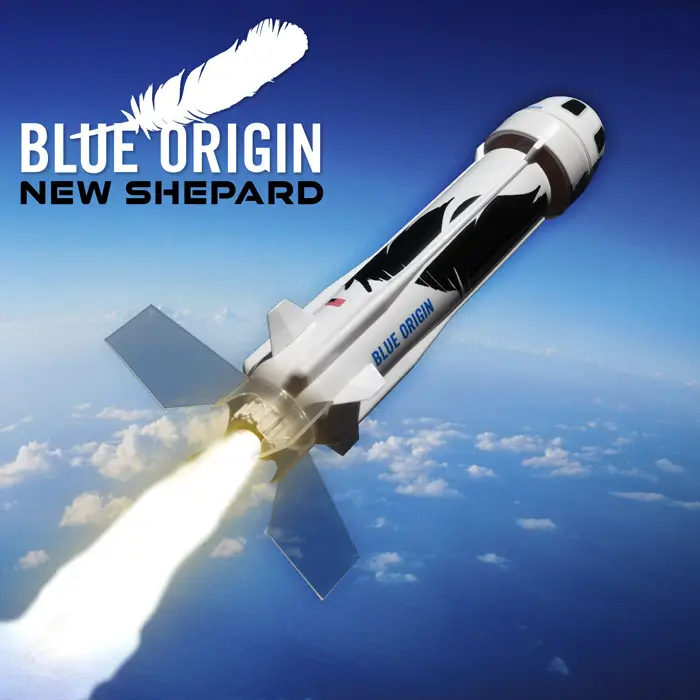
Blue Origin’s New Shepard rocket is set to embark on a highly anticipated mission to demonstrate its ability to create lunar gravity, a significant milestone for the company and space exploration at large. Scheduled for launch on January 28, 2025, at 11 a.m. Eastern Time from West Texas, this flight marks a critical step in advancing the future of lunar exploration, with the flight’s payload carrying cutting-edge technologies crucial for NASA’s Artemis missions.
- Simulating Lunar Gravity
The upcoming flight, named NS-29, will showcase the New Shepard spacecraft’s innovative capability to generate lunar gravity instead of the typical microgravity usually experienced during suborbital missions. This demonstration will take place after the crew capsule separates from the booster, and through the use of reaction control thrusters, the capsule will be spun at approximately 11 revolutions per minute (RPM). This unique feature allows the spacecraft to simulate lunar gravity inside the capsule, particularly at the midpoint of the payload lockers, offering more than two minutes of lunar gravity for its payloads.
This simulated lunar gravity will be a far more extended experience compared to the brief 20 seconds of lunar-like conditions produced by parabolic aircraft flights. The new Shepard mission is expected to provide a groundbreaking simulation of lunar conditions, which is crucial for NASA and other entities developing technologies for the Moon’s surface.
- NASA and Blue Origin’s Partnership
The NS-29 flight will carry 29 payloads inside the capsule, 17 of which are provided by NASA through its Flight Opportunities program. These payloads span a wide array of research areas, including in-situ resource utilization, dust mitigation, advanced habitation systems, sensors and instrumentation, small spacecraft technologies, and entry, descent, and landing. The flight also includes a 30th payload, which will be exposed to the harsh space environment on the exterior of the New Shepard booster.
One notable highlight is the inclusion of payloads from Honeybee Robotics, a space technology division of Blue Origin, adding another dimension to the collaboration between industry and NASA. This mission is part of Blue Origin’s broader goal of accelerating the development of space technologies while reducing costs. By simulating lunar gravity, the company aims to provide invaluable insights for lunar exploration missions, including NASA’s Artemis program, at a fraction of the cost of traditional space missions.
- Lunar Research with New Shepard’s Technology
Dave Limp, CEO of Blue Origin, expressed his excitement about this new capability, emphasizing the immense potential it holds for accelerating lunar research and technology development. He highlighted that this new approach offers a more accessible, lower-cost alternative to traditional partial-gravity simulations, making it a valuable tool for NASA and other lunar tech developers.
“This is an entirely new way to bring lunar gravity to NASA and other lunar technology providers, accelerating their research and tech readiness at a much lower cost,” Limp said in a social media post, underscoring the importance of this technological breakthrough.

- The Journey to Simulating Lunar Gravity
The concept of simulating lunar gravity with New Shepard has been in development for several years. In March 2021, NASA and Blue Origin entered into a partnership to help refine this capability, with NASA providing funding and purchasing payload space on New Shepard. However, the idea was initially discussed as early as August 2020 when Blue Origin’s Erika Wagner outlined the company’s efforts to explore spinning the capsule to mimic lunar gravity conditions. At that time, the first such flight was expected to take place in 2022.
Now, nearly three years later, the company is ready to conduct its maiden lunar gravity demonstration, which has significant implications for future space exploration missions. Blue Origin has plans to expand this capability further, potentially simulating other partial gravity environments, such as Mars, which would further benefit NASA’s research on various planets.
Blue Origin’s innovative approach to simulating lunar gravity is a transformative step in the preparation for human exploration of the Moon. By offering an affordable, repeatable, and reliable method for generating lunar gravity, Blue Origin is positioning itself as a crucial player in advancing lunar and planetary research. This mission represents just the beginning of what could be a new era in space exploration, with exciting possibilities for future missions to the Moon, Mars, and beyond.
SUMMARY
Blue Origin’s New Shepard rocket 🚀 is set to launch its highly anticipated mission to demonstrate its ability to create lunar gravity 🌑, marking a significant milestone in space exploration 🌌. Scheduled for January 28, 2025 📅, this flight will showcase the spacecraft’s unique capability to spin and generate lunar gravity, providing valuable data for NASA’s lunar missions 🛰️. The mission will carry 29 payloads 🧳, including advanced technologies from NASA and Blue Origin’s Honeybee Robotics division, aimed at accelerating lunar exploration.
The New Shepard spacecraft will spin at 11 revolutions per minute, simulating lunar gravity inside its capsule. This will provide more than two minutes of lunar-like conditions, offering a much longer experience compared to traditional methods. With partnerships and funding from NASA 🚀, Blue Origin 🌙 is paving the way for more affordable and accessible lunar research, with potential applications for Mars 🪐 and other planetary missions in the future.








About the Author