Four Israeli Soldiers Freed by Hamas Amid Ceasefire Deal
Hamas Releases Four Israeli Soldiers from Gaza in Ceasefire Agreement; Israel to Free Dozens of Palestinian Detainees
Milestone in the Ceasefire Agreement
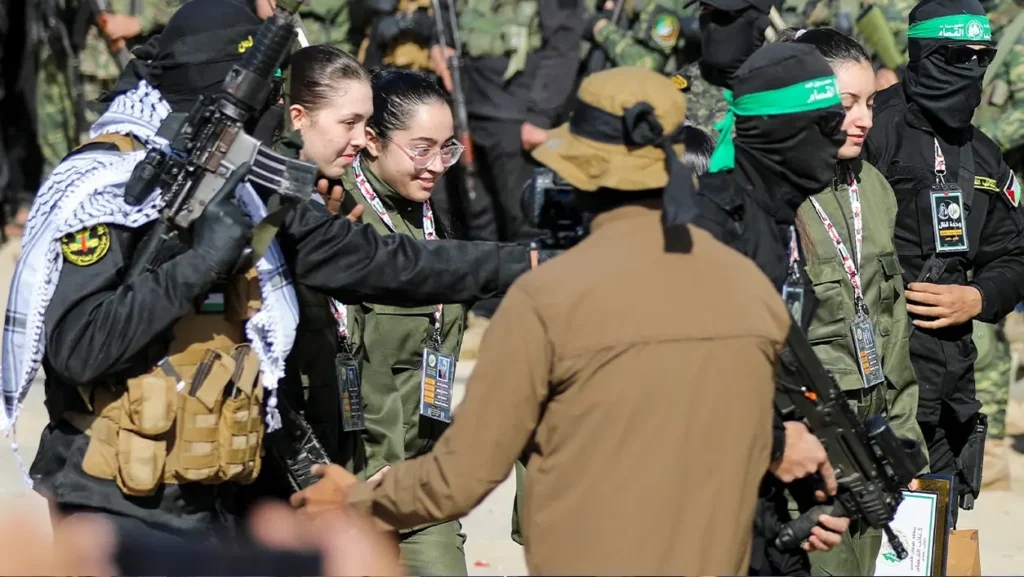
In a significant development during the ongoing ceasefire negotiations, Hamas released four female Israeli soldiers who were held captive in Gaza. The handover took place in Palestine Square, Gaza City, in the presence of Red Cross officials and a large crowd of Palestinians. The exchange marks a pivotal moment in the region’s history, as Israel prepares to reciprocate by releasing hundreds of Palestinian detainees.
- Details of the Exchange
The four Israeli soldiers—Karina Ariev, Daniella Gilboa, Naama Levy, and Liri Albag—were handed over to representatives of the Red Cross. Clad in Israeli military uniforms, the captives waved to the gathered crowd before departing for Israeli territory. Following their release, the Israeli Defense Forces (IDF) confirmed the soldiers were being escorted by special forces and security personnel for a medical assessment.
Israel’s Response: The Release of Palestinian Detainees
As part of the agreement, Israel is set to release 200 Palestinian prisoners held in Ofer Prison in the occupied West Bank and Ketziot Prison in the Negev desert. The group includes:
- 121 detainees serving life sentences
- 79 prisoners with long-term sentences
- A 69-year-old prisoner, the eldest among them
- A 15-year-old prisoner, the youngest of the group
Additionally, 70 of the released Palestinians will face deportation. Egypt has agreed to host them temporarily before their relocation to Tunisia, Algeria, and Turkey, which have offered to receive them.
Symbolic Significance in Gaza
The handover ceremony in Gaza City was a momentous occasion, with masked fighters from Hamas and Islamic Jihad assembling alongside other Palestinian factions. The release, termed a “historic moment” by Al Jazeera’s Ibrahim Al Khaliji, drew large crowds and amplified hopes for further reconciliation steps.
Representatives from the Red Cross and a Hamas fighter were seen finalizing documentation before the exchange. This gesture underscores the humanitarian importance of the ceasefire agreement while symbolizing a fragile yet noteworthy step toward easing tensions.
Opening Doors for Humanitarian Aid
As part of the broader agreement, Israel is expected to:
- Withdraw forces from the Netzarim Corridor, enabling displaced Palestinians to return to their homes in northern Gaza.
- Open the Rafah border crossing, facilitating the entry of humanitarian aid and commercial supplies into Gaza.
Al Jazeera’s Hind Khoudary reported from Gaza’s Bureij refugee camp that the release has rejuvenated hopes among displaced Palestinians, many of whom have already begun gathering near Wadi Gaza to cross into the north. The movement of displaced individuals is anticipated to begin as early as Sunday.
A Path Forward
The exchange signals a critical step in addressing the humanitarian crisis in Gaza and fostering dialogue between the conflicting parties. By opening the Rafah border and allowing displaced residents to return, the agreement aims to alleviate the ongoing hardships faced by Palestinians in the region. Meanwhile, the release of Israeli captives underscores the delicate balance required to maintain peace in such negotiations.
This landmark deal serves as a beacon of hope in an otherwise turbulent region, demonstrating that even amid deep-seated conflicts, humanitarian efforts can pave the way for progress.
Stay informed with the latest updates on Gaza news and ceasefire agreements.
About the Author