South Korea’s Impeached President Arrested for Martial Law Plot
South Korea’s impeached President Yoon Suk Yeol has been arrested following his failed attempt to impose martial law, marking an unprecedented event in the nation’s history.
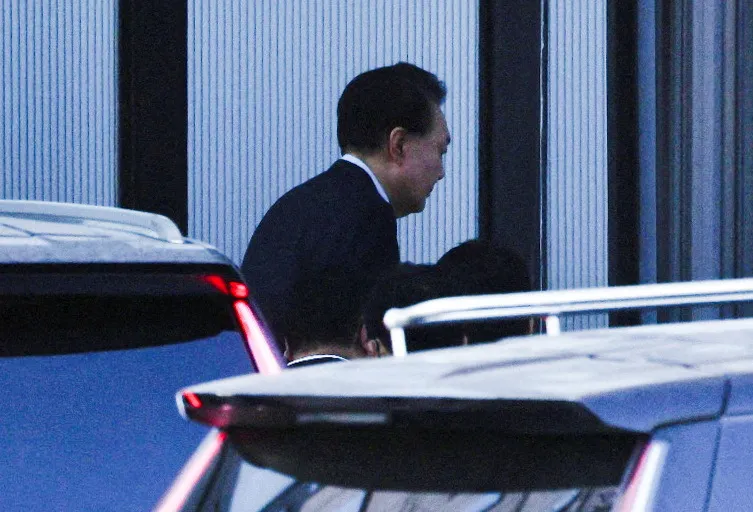
- South Korea’s Impeached President Yoon Arrested for Failed Martial Law Attempt
In an unprecedented political event, South Korea’s impeached President Yoon Suk Yeol was arrested after his controversial and failed attempt to impose martial law last month. This historic arrest, marking the first time a sitting South Korean president has been detained, comes amid growing political turmoil and widespread criticism of Yoon’s actions that disrupted the nation’s constitutional order.
- Martial Law Bid Sparks Political Crisis in South Korea
The political crisis erupted when Yoon declared martial law on December 3, directing military forces to storm the National Assembly. His aim was to prevent lawmakers from voting on a motion to reject his decree. Despite deploying troops, his move backfired as legislators managed to convene and overturn the martial law declaration within hours, exposing the fragility of Yoon’s position.
The decision to impose martial law has been widely condemned by opposition leaders, legal experts, and the public, who view it as an unconstitutional power grab that undermined South Korea’s democratic foundations.
- Impeachment Followed by Unprecedented Arrest
On December 14, just days after the martial law fiasco, the National Assembly impeached Yoon, leading to his suspension from office. The Constitutional Court is still deliberating whether to uphold his impeachment, which could result in his permanent removal from office.
Following weeks of tense standoffs with law enforcement, Yoon was arrested on January 10 by the Corruption Investigation Office (CIO) after a warrant was issued for his detention. He now faces charges of insurrection, which could lead to life imprisonment or the death penalty if proven guilty.
- Over 3,000 Officers Deployed for Arrest Operation
The operation to arrest Yoon was meticulously planned and executed. On the morning of January 10, over 3,000 officers surrounded Yoon’s fortified residence in central Seoul. The standoff lasted for hours as Yoon’s security personnel initially resisted the officers’ attempts to enter.
Authorities used ladders to breach the compound, and after negotiations, Yoon agreed to leave his residence voluntarily. In a prerecorded video message released shortly before his arrest, Yoon stated, “I do not accept the legality of this investigation, but I have decided to comply to prevent any unfortunate bloodshed.”
- Historic Implications of Yoon’s Arrest
Yoon’s arrest marks a turning point in South Korea’s political history. He is the first sitting president to be detained, setting a precedent for accountability and rule of law in the country.
Political analysts have noted that this case underscores the resilience of South Korea’s democratic institutions, despite the significant challenges posed by Yoon’s actions.
Park Chan-dae, floor leader of the opposition Democratic Party, commented, “The arrest of Yoon Suk Yeol is the first step toward restoring constitutional order, democracy, and the rule of law in South Korea.”
- South Korean Opposition Welcomes Arrest
The opposition Democratic Party has strongly supported the arrest, viewing it as a necessary step to restore stability. “Although overdue, it is truly fortunate to confirm that public authority and justice in South Korea are still alive,” Park Chan-dae said during a party meeting.
The arrest has also been welcomed by civil society organizations and international observers, who have long raised concerns about Yoon’s disregard for democratic norms.
- Charges of Insurrection and Potential Sentencing
Yoon now faces serious charges, including insurrection, a crime punishable by life imprisonment or the death penalty under South Korean law. Legal experts have highlighted the gravity of these charges, emphasizing that they reflect the unprecedented nature of Yoon’s actions.
If convicted, Yoon could become the most high-profile figure in South Korean history to face such severe legal consequences. The case is expected to set a precedent for how future leaders are held accountable for unconstitutional actions.
- Public Reaction and Protests
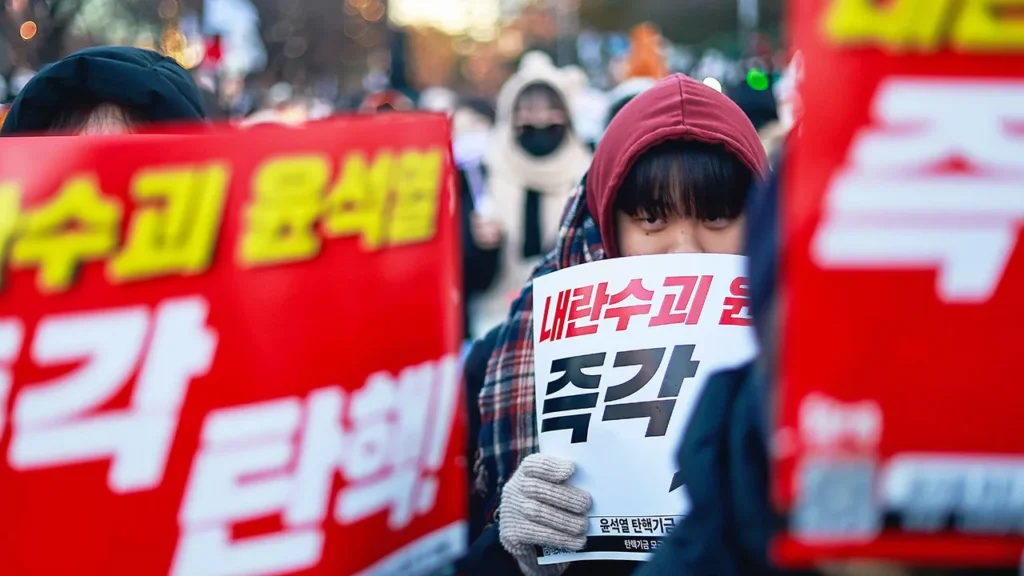
The arrest has sparked mixed reactions across South Korea. While many citizens have expressed relief that the rule of law is being upheld, Yoon’s supporters have staged protests, accusing the government of political persecution.
Several rallies were held outside the Corruption Investigation Office as Yoon was taken into custody. Protesters chanted slogans denouncing his arrest and demanding his release.
However, public opinion surveys indicate that a majority of South Koreans support the arrest, viewing it as a necessary step to restore order and accountability.
- South Korea’s Constitutional Court to Rule on Impeachment
As the legal proceedings against Yoon continue, all eyes are on the Constitutional Court, which is expected to rule on the validity of his impeachment in the coming weeks.
If the court upholds the impeachment, Yoon will be permanently removed from office, paving the way for new leadership. If not, he could potentially be reinstated, though the criminal charges against him would still pose significant hurdles to his political career.
- Global Reactions to Yoon’s Arrest
Yoon’s arrest has drawn international attention, with many foreign governments and organizations closely monitoring the situation. Analysts have compared the crisis to similar events in other countries, noting the importance of holding leaders accountable in democratic systems.
The United Nations has called for due process in Yoon’s trial, emphasizing the need for transparency and fairness. Meanwhile, international media outlets have highlighted the significance of the case as a test of South Korea’s commitment to democracy and the rule of law.
- What’s Next for South Korea?
Yoon’s arrest marks the beginning of a long legal battle that will shape the future of South Korea’s political landscape. The outcome of his trial, as well as the Constitutional Court’s ruling on his impeachment, will have far-reaching implications for the country’s democracy.
In the meantime, acting President Choi Sang-mok has vowed to restore stability and ensure that justice is served. “This situation is a crucial moment for maintaining order and the rule of law in South Korea,” Choi said in a statement.
- A Defining Moment for South Korean Democracy
The arrest of President Yoon Suk Yeol is a defining moment in South Korea’s history. It demonstrates the resilience of democratic institutions in the face of unprecedented challenges and sends a strong message about the importance of accountability.
As the nation awaits the next steps in this historic case, the world watches closely, recognizing the significance of this event for South Korea and beyond.
About the Author