Loading...
30 Long Questions with Answers
1. Explain the meaning and importance of the Preamble of India.
Answer: The Preamble is the introductory statement of the Constitution and reflects its guiding values. It declares India as sovereign, socialist, secular, democratic, and a republic. It also promises justice, liberty, equality, and fraternity. Courts use it to understand the spirit of the Constitution, though it is not a source of power by itself.
2. What are Fundamental Rights and why are they important for citizens.
Answer: Fundamental Rights are basic freedoms guaranteed by the Constitution, mainly in Part III. They protect citizens from arbitrary state action and ensure dignity and equality. They include equality, freedom, protection against exploitation, religious freedom, cultural and educational rights, and constitutional remedies. They are enforceable in courts.
3. Differentiate between Fundamental Rights and Directive Principles of State Policy.
Answer: Fundamental Rights are justiciable, meaning courts can enforce them. Directive Principles are non justiciable, meant to guide the state in policy making. Rights protect individual liberty, while Directive Principles aim at social and economic welfare. Both together create a balance between freedom and welfare.
4. Describe the role of the Election Commission of India.
Answer: The Election Commission conducts free and fair elections to Parliament, state legislatures, and the offices of President and Vice President. It prepares electoral rolls, schedules elections, and enforces the Model Code of Conduct. It also supervises recognition of political parties and monitors election expenditure.
5. Explain the functioning of Parliament in India.
Answer: Parliament consists of the President, Lok Sabha, and Rajya Sabha. It makes laws, passes the Budget, and holds the executive accountable through questions and debates. Lok Sabha controls the Council of Ministers through collective responsibility. Rajya Sabha represents states and reviews legislation.
6. What is federalism in India and how is power divided.
Answer: Federalism means division of powers between the Centre and states. The Seventh Schedule lists Union, State, and Concurrent subjects. Union handles national matters like defence and foreign affairs. States handle local matters like police and public health. Concurrent list allows both to legislate, with Union law prevailing in conflict.
7. Explain the causes and impact of the Revolt of 1857.
Answer: The revolt had political, economic, social, and military causes, including annexations, land revenue policies, and discontent among soldiers. It spread across northern and central India. Though suppressed, it led to the end of Company rule and the start of Crown rule. It also influenced later nationalist movements.
8. Write a short note on the Non Cooperation Movement.
Answer: Launched in 1920, it urged Indians to boycott British institutions, schools, law courts, and foreign goods. It aimed to attain Swaraj through peaceful means. The movement saw mass participation but was withdrawn after the Chauri Chaura incident in 1922. It still marked a major phase of mass nationalism.
9. Explain the main features of the Indian monsoon.
Answer: The monsoon is a seasonal wind system with a clear reversal between summer and winter. The southwest monsoon brings most rainfall from June to September. It is uneven across regions, with heavy rain on the Western Ghats and the North East. It is crucial for agriculture and water resources.
10. Why are river plains important for India.
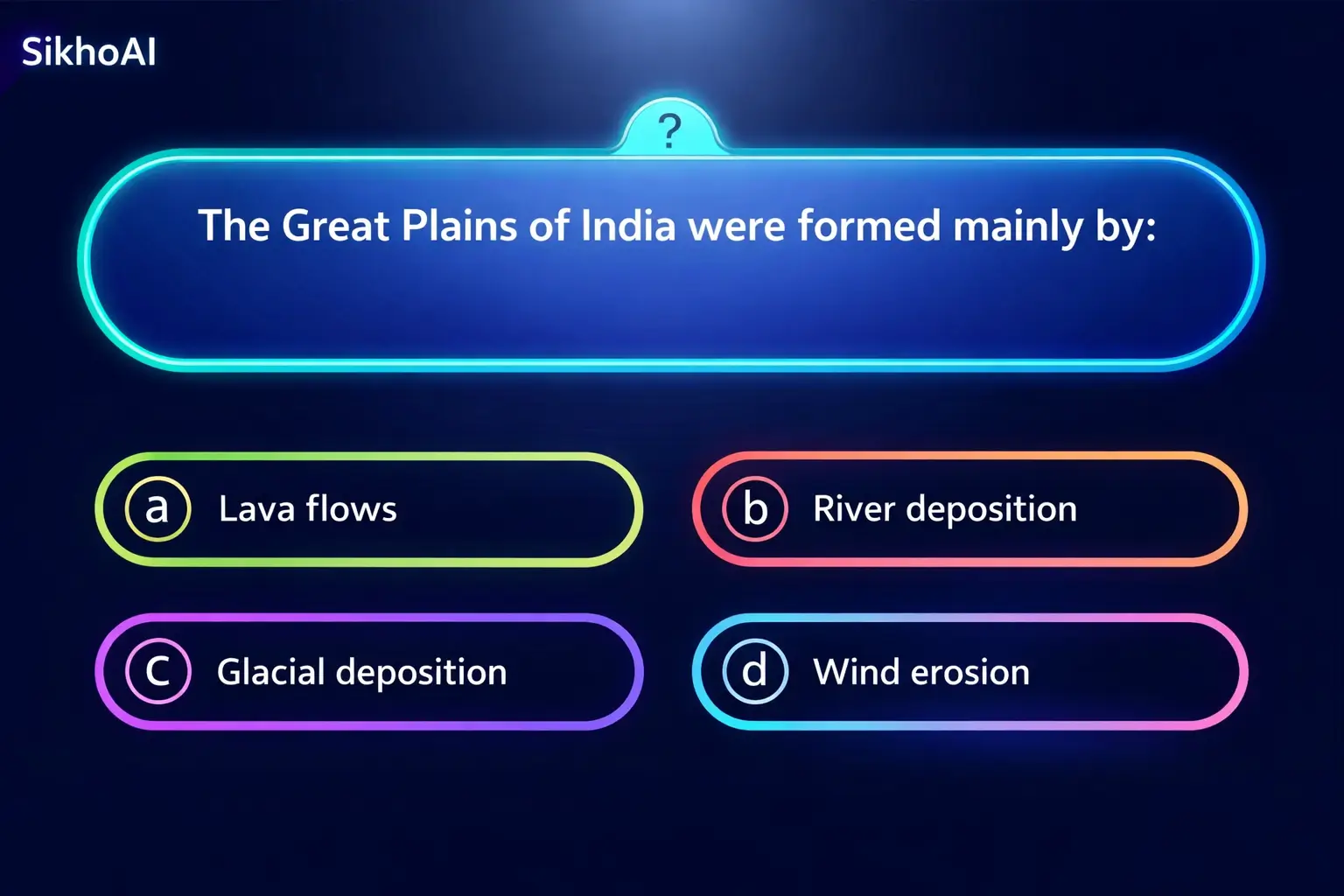
Answer: River plains are fertile due to alluvial soil deposited by rivers. They support dense population, intensive agriculture, and large settlements. They also provide water for irrigation and industry. Major transport routes and cities have developed along these plains.
11. Explain GDP and why it matters for an economy.
Answer: GDP measures the total value of goods and services produced within a country in a given period. It shows the size and growth of the economy. Policymakers use it to plan development and allocate resources. However, GDP alone does not capture inequality or quality of life.
12. What is inflation and how does it affect common people.
Answer: Inflation is a general rise in prices over time. It reduces the purchasing power of money, making daily essentials costlier. Fixed income earners and the poor are often hit harder. Moderate inflation may occur in growing economies, but high inflation creates hardship and uncertainty.
13. Explain the role of RBI in the Indian economy.
Answer: RBI is India’s central bank. It manages monetary policy, controls inflation, regulates banks, and ensures financial stability. It issues currency and manages foreign exchange reserves. It also acts as banker to the government and lender of last resort to banks.
14. What is GST and why was it introduced.
Answer: GST is a unified indirect tax on the supply of goods and services. It replaced many central and state indirect taxes to simplify taxation. It aimed to create a common national market and reduce cascading taxes. It also improved tax compliance through a structured input credit system.
15. Describe the importance of the Himalayas for India.
Answer: The Himalayas act as a climatic barrier, blocking cold winds from Central Asia and influencing monsoon patterns. They are the source of major rivers like the Ganga and Brahmaputra systems. They support biodiversity and forests and provide water through glaciers. They also have strategic significance.
16. Explain black soil and its agricultural importance.
Answer: Black soil, also called regur, is rich in clay and retains moisture well. It is ideal for cotton and also supports crops like soybean and groundnut. It is common in parts of Maharashtra, Madhya Pradesh, and Gujarat. Its moisture retention helps in regions with irregular rainfall.
17. What is the significance of Article 32.
Answer: Article 32 allows citizens to move the Supreme Court for enforcement of Fundamental Rights. It empowers the Court to issue writs. It is often called the heart and soul of the Constitution because it makes rights meaningful. It strengthens rule of law and limits arbitrary state action.
18. Explain the difference between Lok Sabha and Rajya Sabha.
Answer: Lok Sabha is the House of the People and is directly elected. Rajya Sabha represents states and is indirectly elected, with a permanent nature. Money Bills originate only in Lok Sabha. The Council of Ministers is responsible to Lok Sabha.
19. What are the main reasons for biodiversity conservation.
Answer: Biodiversity supports ecosystems that provide food, water, and clean air. It maintains ecological balance and resilience against disasters and climate change. Many medicines and livelihoods depend on biodiversity. Conservation also protects genetic resources for future needs.
20. Explain the water cycle in simple terms.
Answer: The water cycle is the movement of water between Earth and the atmosphere. Water evaporates from oceans and lakes, condenses into clouds, and falls as rain or snow. It then flows as runoff or seeps into the ground. The process repeats continuously.
21. Describe the causes of earthquakes.
Answer: Earthquakes mainly occur due to sudden movement along faults in the Earth’s crust. This movement releases energy as seismic waves. Many quakes happen at plate boundaries. They can also be caused by volcanic activity and, rarely, human activity like mining.
22. What is the role of forests in climate regulation.
Answer: Forests absorb carbon dioxide and store carbon, reducing greenhouse gases. They regulate rainfall patterns and maintain soil moisture. Forest cover prevents soil erosion and supports river systems. Forests also cool local climate through transpiration.
23. Explain the concept of unemployment rate.
Answer: The unemployment rate is the share of the labour force that is without work but actively seeking employment. It shows the health of the job market. A high rate indicates stress in the economy and social challenges. It is measured through surveys and varies by region and sector.
24. What is the importance of local self government.
Answer: Local self government brings decision making closer to people. It helps address local needs like water supply, sanitation, and roads. It improves participation, accountability, and delivery of services. Panchayats and municipalities form the key structure.
25. Describe the significance of the Quit India Movement.
Answer: Launched in 1942, it demanded an end to British rule. It saw widespread protests, strikes, and civil disobedience. Many leaders were arrested, but popular resistance continued. It showed that British authority had lost legitimacy and strengthened the demand for independence.
26. Explain why the Indian monsoon is called the lifeline of agriculture.
Answer: A large part of Indian farming depends on rainfall. The monsoon provides water for kharif crops and replenishes reservoirs and groundwater. Delayed or weak monsoon can reduce output and raise food prices. Good monsoon supports rural income and overall economic stability.
27. What are ocean currents and why do they matter.
Answer: Ocean currents are large scale movements of seawater driven by wind, temperature, and salinity differences. They influence climate by transferring heat. They affect rainfall, marine life, and navigation. For example, warm currents can raise coastal temperatures.
28. Explain the importance of the Supreme Court in a democracy.
Answer: The Supreme Court protects the Constitution and Fundamental Rights. It interprets laws and resolves disputes between Centre and states. It ensures rule of law and checks abuse of power through judicial review. Its independence supports a balanced democratic system.
29. Describe the basic structure of the cell.
Answer: A cell has a cell membrane, cytoplasm, and genetic material. The nucleus controls activities in most cells. Organelles like mitochondria produce energy, while ribosomes help in protein synthesis. Plant cells also have a cell wall and chloroplasts.
30. Write a brief note on why practice tests improve accuracy.
Answer: Practice tests build familiarity with question patterns and reduce exam stress. They reveal weak areas that need revision. Timed practice improves speed and decision making. Repeated correction of mistakes strengthens long term memory and boosts accuracy.
Free Study Resources
Download the complete PDF containing all 120 MCQs, Long Answers, and Previous Year Papers.
Download PDF Kit